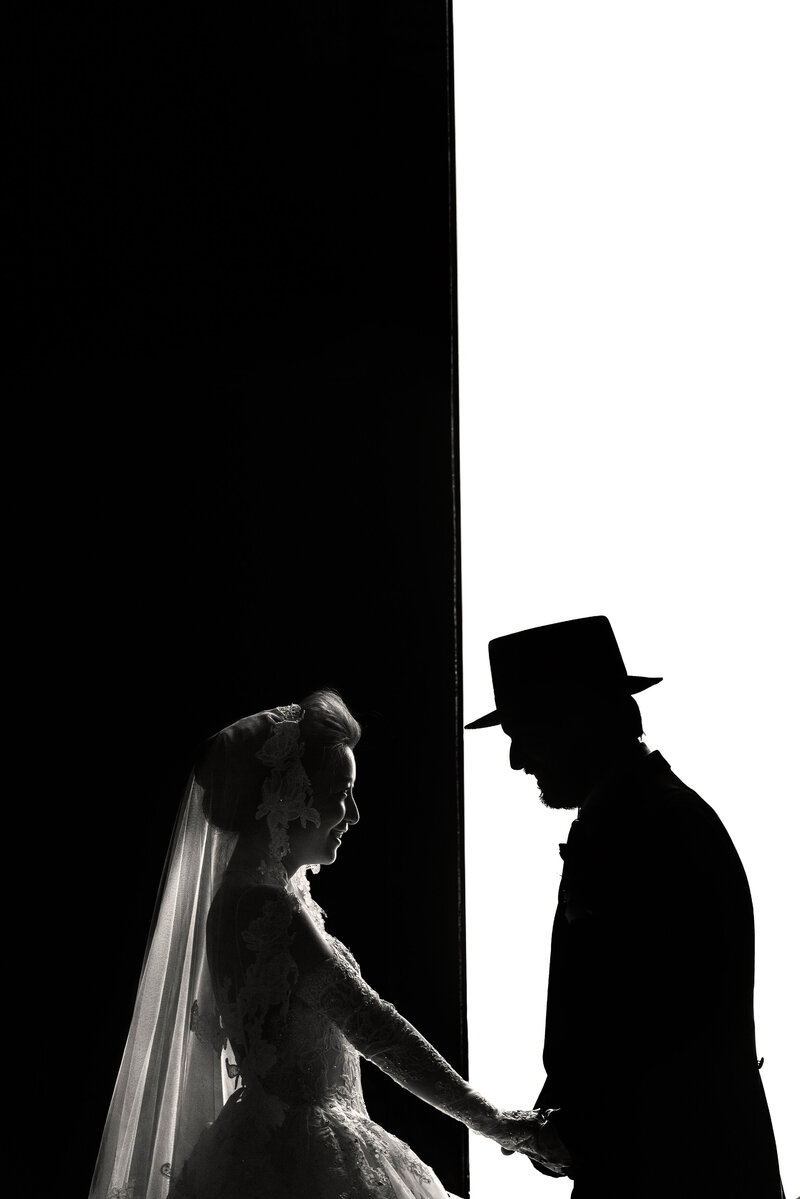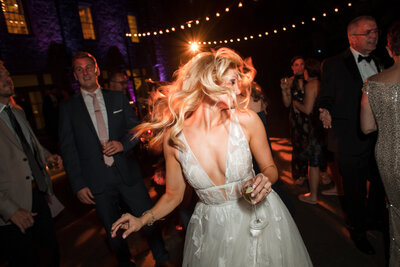

I have shot at Old Westbury Gardens many times. Mostly weddings. Almost always with the same reaction at the end of the day: this is one of the best estates in the New York region for the kind of work I do, and almost nobody books it as often as they should.
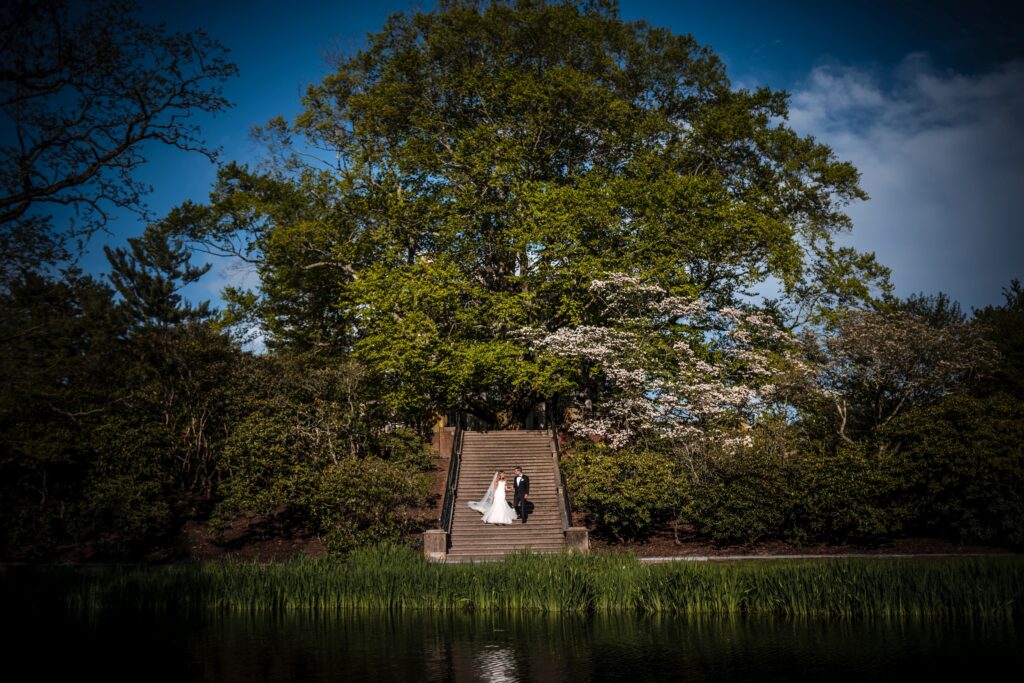
It sits on Long Island‘s North Shore: two hundred acres, an English-style mansion from 1906, walled and rose gardens, and a pond with weeping willows, a thatched cottage, gates, and architectural details I am still finding new angles on after years of shooting here. There is also the part that nobody mentions in the guide-style write-ups: I just love it. I love working here. I run out of session time before I run out of things to photograph, every single time.
This post is about why I love it, what it is good for, and what to know before you book a session.
Why I love shooting at Old Westbury Gardens
A few things about this place that I want to say plainly before I start naming locations.
- The light is good. Two hundred acres means you can chase it. Whatever direction it is coming from, whatever time of day, there is an angle of the property that is using it well. Most estates of this size have one or two great light moments. Old Westbury has them all afternoon.
- The permit gets you privacy. Photography here requires a permit arranged in advance, which sounds like a hassle and is actually a feature. The permit means the property is not overrun with tourists when you are working. You get the gardens to yourselves for the hours you have booked. For couples used to the Central Park experience of negotiating around two hundred strangers per frame, this is a completely different working environment.
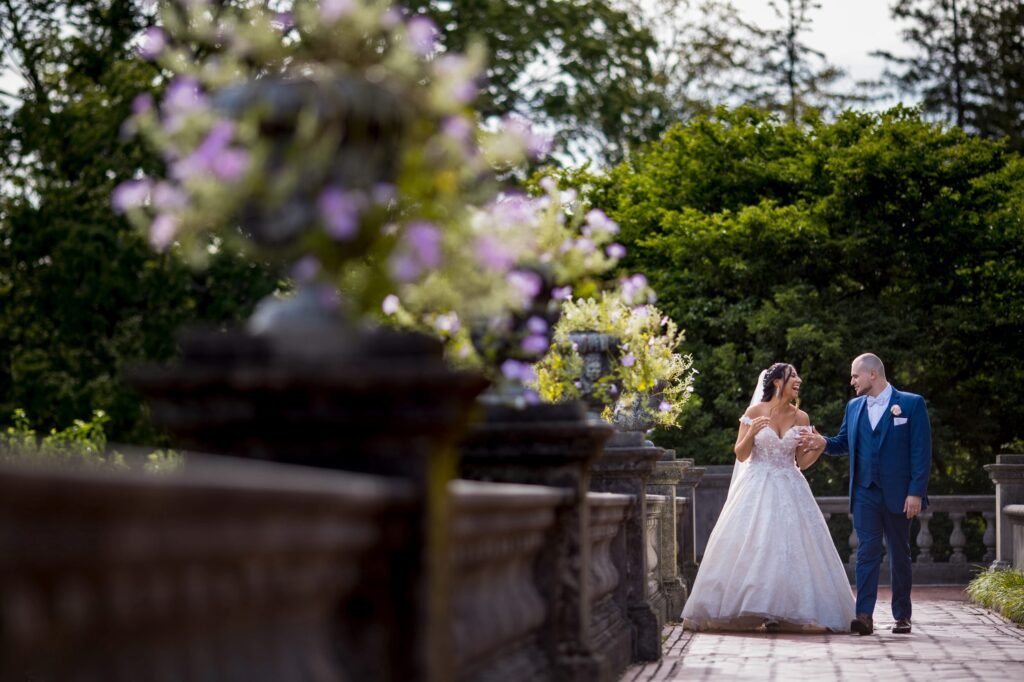
- You get nature and architecture in the same session. This is rare. Most location-driven engagement and wedding sessions force you to choose between green-and-natural and built-and-formal. Old Westbury gives you both, and they are within walking distance of each other. The mansion exterior, the formal gardens, the wilder pond areas, the gates and walls, and pavilions — you can pull a full visual range out of one location without ever getting in a car.
- There are more good spots than any guide can list. The locations I am about to name are the obvious ones, and they are the ones every couple asks about. They are not the only good ones. Half of my best frames here come from the in-between moments. A path. A wall. A doorway. A tree. A corner of the mansion that catches the light at a specific angle for forty-five minutes a day. The named spots are a starting point. Once you are inside the gates with a permit, walk.
The named locations
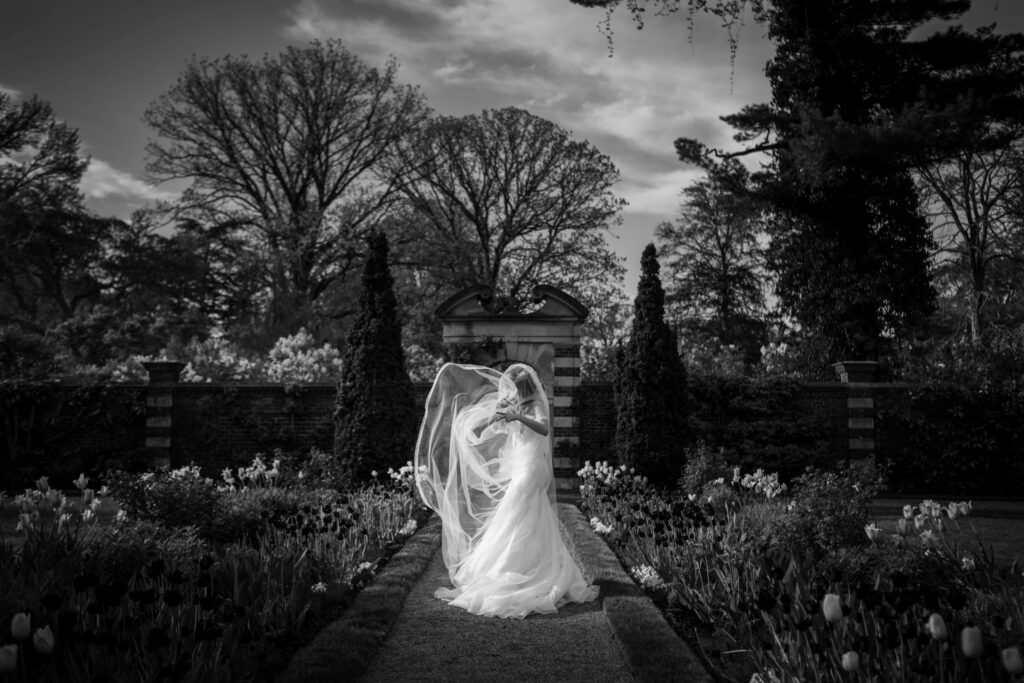
The Walled Garden
A formal enclosed garden with hedges, seasonal plantings, and a real sense of being a room rather than a yard. Because it is enclosed, the light is filtered, and the wind is blocked, which is good for a hundred reasons during a session. It also means you have privacy inside the bigger privacy of the property — even if another permitted session is happening elsewhere on the grounds, the walled garden is its own space.
Best in late spring through early fall when the plantings are full.
The Rose Garden
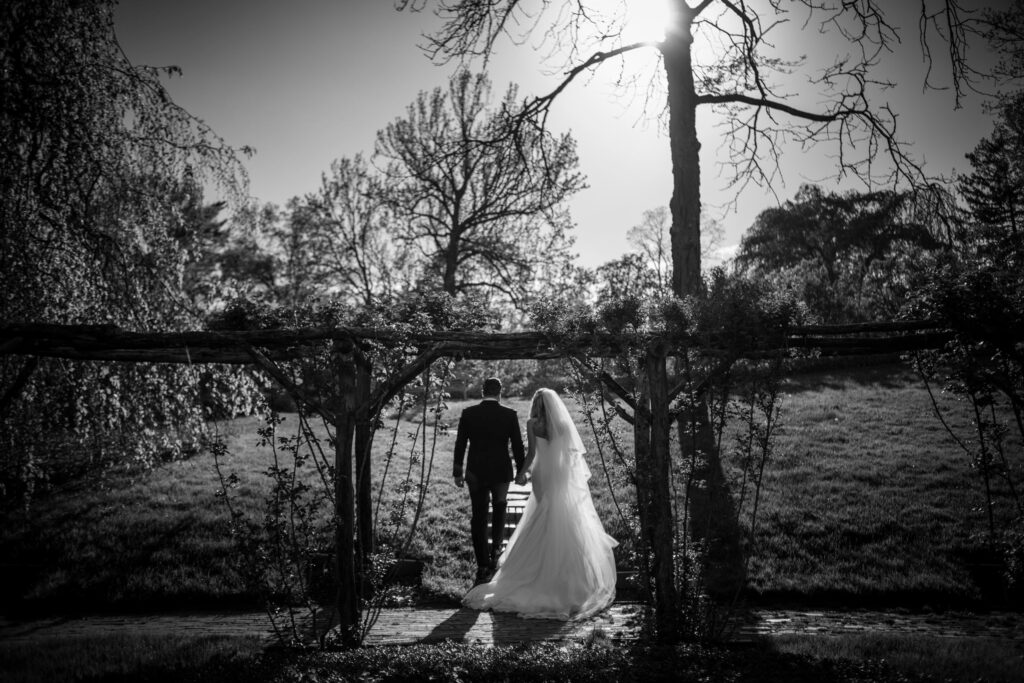
Peak in late May through June. The smell alone makes it worth being in. In a session, the rose garden gives you both wide compositions (the whole color of the place) and tight ones (close-up work on petals and texture). The trellises and the pergola structures inside the rose garden are useful in their own right — frames within the frame.
If your session is timed to peak bloom, this is a stop you do not skip.
The Pond
A reflective pond with weeping willows along the edges, set away from the more formal gardens. The willows are the reason to come here. They make a curtain of green-gold light that you cannot replicate anywhere else on the property. Reflections in the water double everything.
This is the spot on the property that feels least like a manicured estate and most like a place. It is also the quietest part of the grounds.
The South Lawn and the mansion exterior
The mansion is genuinely beautiful. English country house architecture, brick, mullioned windows, ivy in the right places. The South Lawn gives you a wide approach to the building. The closer angles — the doors, the side facades, the architectural details — give you frames that read as Cotswolds before they read as Long Island.
For wedding portraits, especially, this is where the formal images often happen.
The Thatched Cottage
A small thatched-roof cottage tucked into the property. Storybook in the most literal sense. Works as a complete change of register from the formal mansion architecture. For couples who want a session that includes a moment of whimsy or fairytale-ness without the whole session committing to that aesthetic, the cottage is a useful tonal break.
The unnamed locations
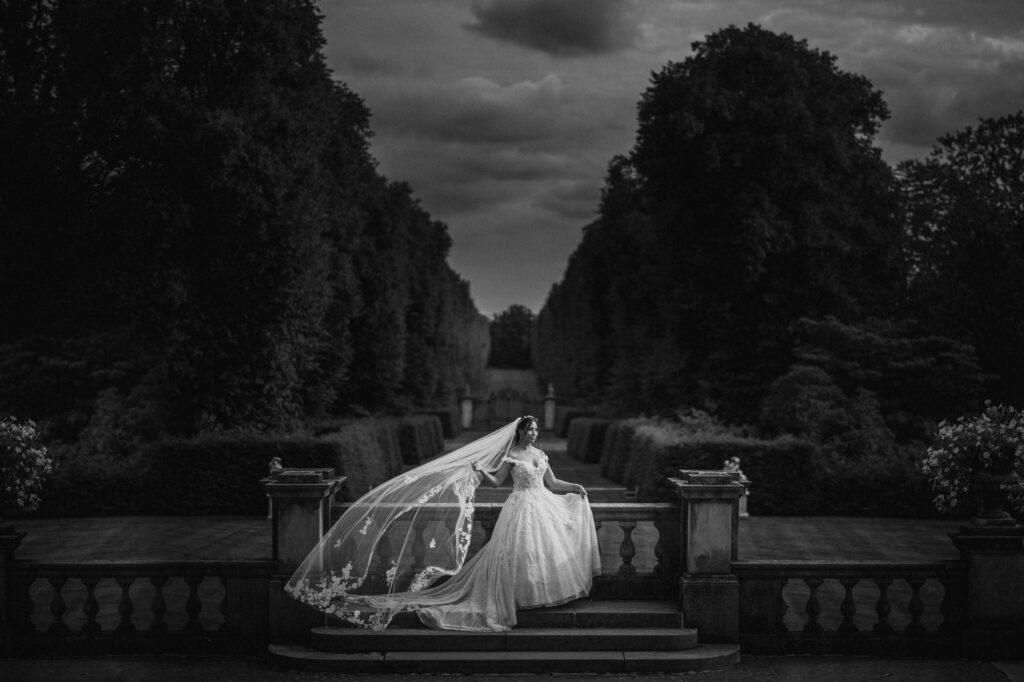
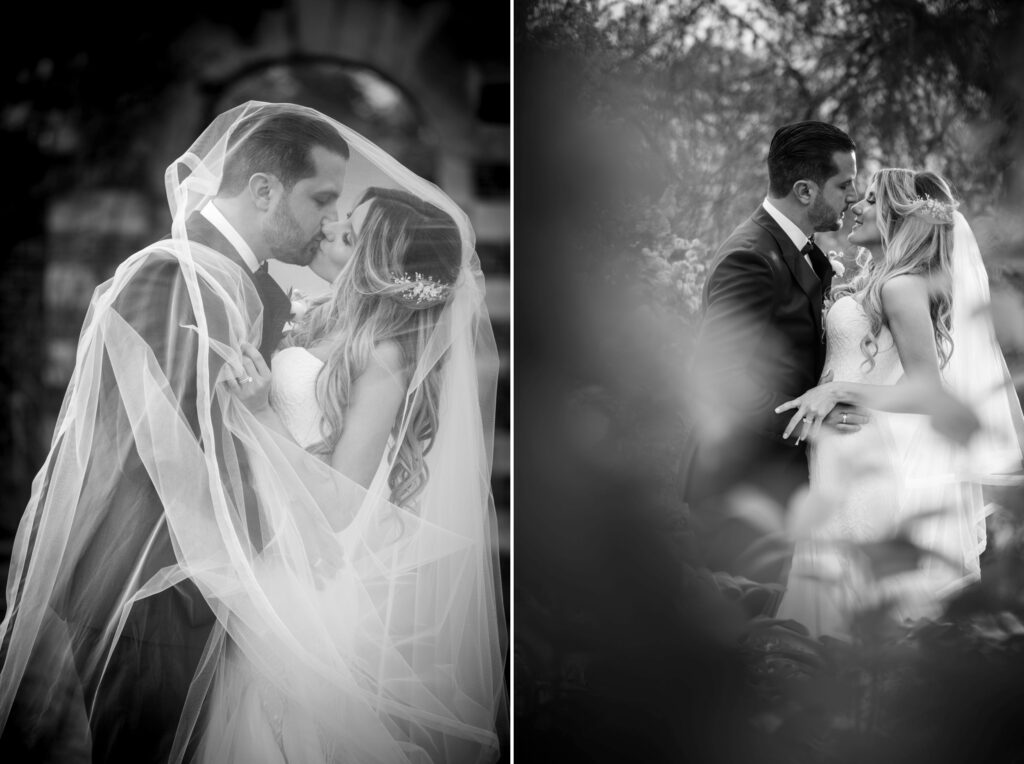
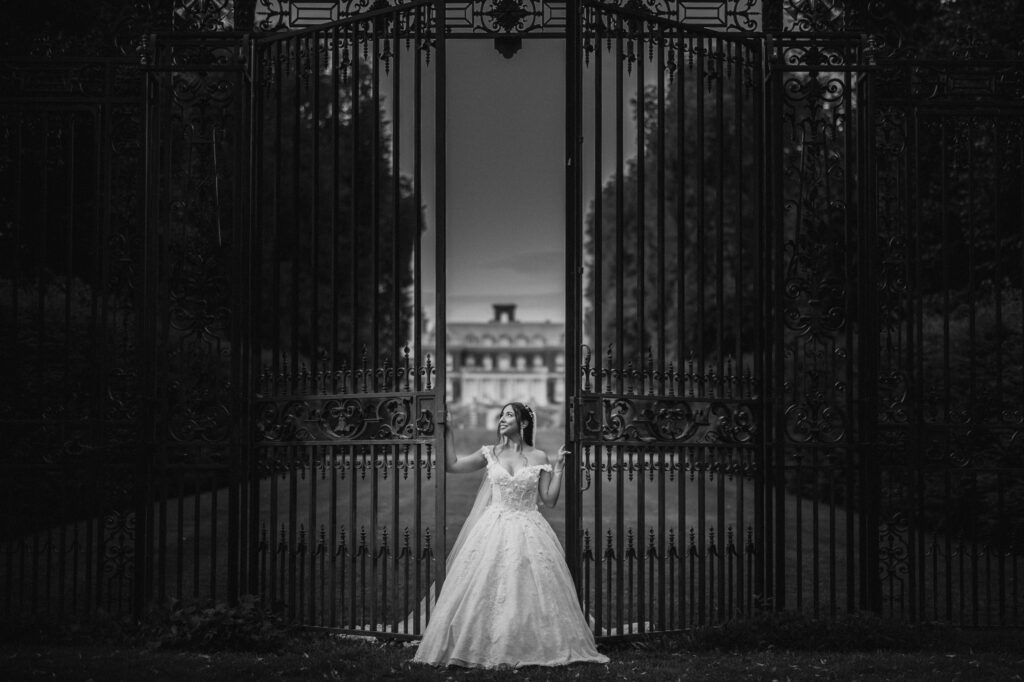
The gates. Les allées. The garden paths between the named locations. Architectural details on the mansion’s side and back facades are not photographed because everybody is shooting the front. Benches. The steps. Pavilion structures. The light comes through the trees onto a path with nothing else in it.
I am not going to name specific ones because the best of these change with the season and with the time of day. The point is that the property keeps giving. Walk slowly. Stop when you see something. Trust your photographer to read the place as we go.
What to know before booking
- You need a permit. All commercial, portrait, and wedding photography at Old Westbury Gardens requires a permit arranged in advance through the estate. The permit office can walk you through pricing and availability. Plan for this several weeks ahead at a minimum. Peak season (late spring, early summer, fall) books up further out.
- The estate has hours. Sessions need to be scheduled within the property’s open hours, which vary by season. Verify before booking the rest of your timeline around it.
- Walking distances matter. The property is large. Plan for shoes you can walk in, especially if your session route includes both the formal gardens and the pond.
- Weather matters more here than at most locations. Because so much of the property is outdoor and the indoor architecture is exterior-only (you cannot shoot inside the mansion for sessions), rain is a real consideration. Build flexibility into your scheduling if you can.
Frequently Asked Questions: Photography at Old Westbury Gardens
Can I take photos at Old Westbury Gardens?
Casual personal photography while visiting as a paying guest is generally allowed. Commercial, portrait, engagement, and wedding photography all require a permit arranged in advance with the estate. If you are hiring a photographer for your session, you need a permit.
How much is the photography permit at Old Westbury Gardens?
Permit pricing varies by session type and time of year. Contact the estate directly through the Old Westbury Gardens website for current rates and availability.
What is the best time of year for an Old Westbury Gardens session?
Late May and June for peak rose bloom. Late September through October for fall color and architectural light. Spring (April-May) for new growth and a green palette. Summer is beautiful but hot and the light is harsh midday — schedule late afternoon. Winter is closed for portrait sessions.
Can we have our wedding at Old Westbury Gardens?
Yes. Old Westbury Gardens hosts weddings on the property, both ceremonies and receptions, with multiple ceremony location options on the grounds. Contact the estate’s events team for venue rental information.
What time of day is best for photography at Old Westbury Gardens?
Late afternoon into golden hour for the warmest light. The two hours before sunset are when the property is at its most photogenic, particularly the mansion exterior and the South Lawn.
Do you photograph weddings at Old Westbury Gardens regularly?
Yes. It is one of my most-shot estate venues in the New York region. If your wedding or session is here, I would love to hear about it.