I had photographed at Lyndhurst before, but never for a full day, and a full day turned out to be a different venue than the one I thought I knew. Sixty-seven acres in Tarrytown, Gothic Revival castle, Hudson River, twenty-five miles north of Manhattan. All of that is true, and all of it is on every other page about this place. Here is what I would actually tell you.
The light
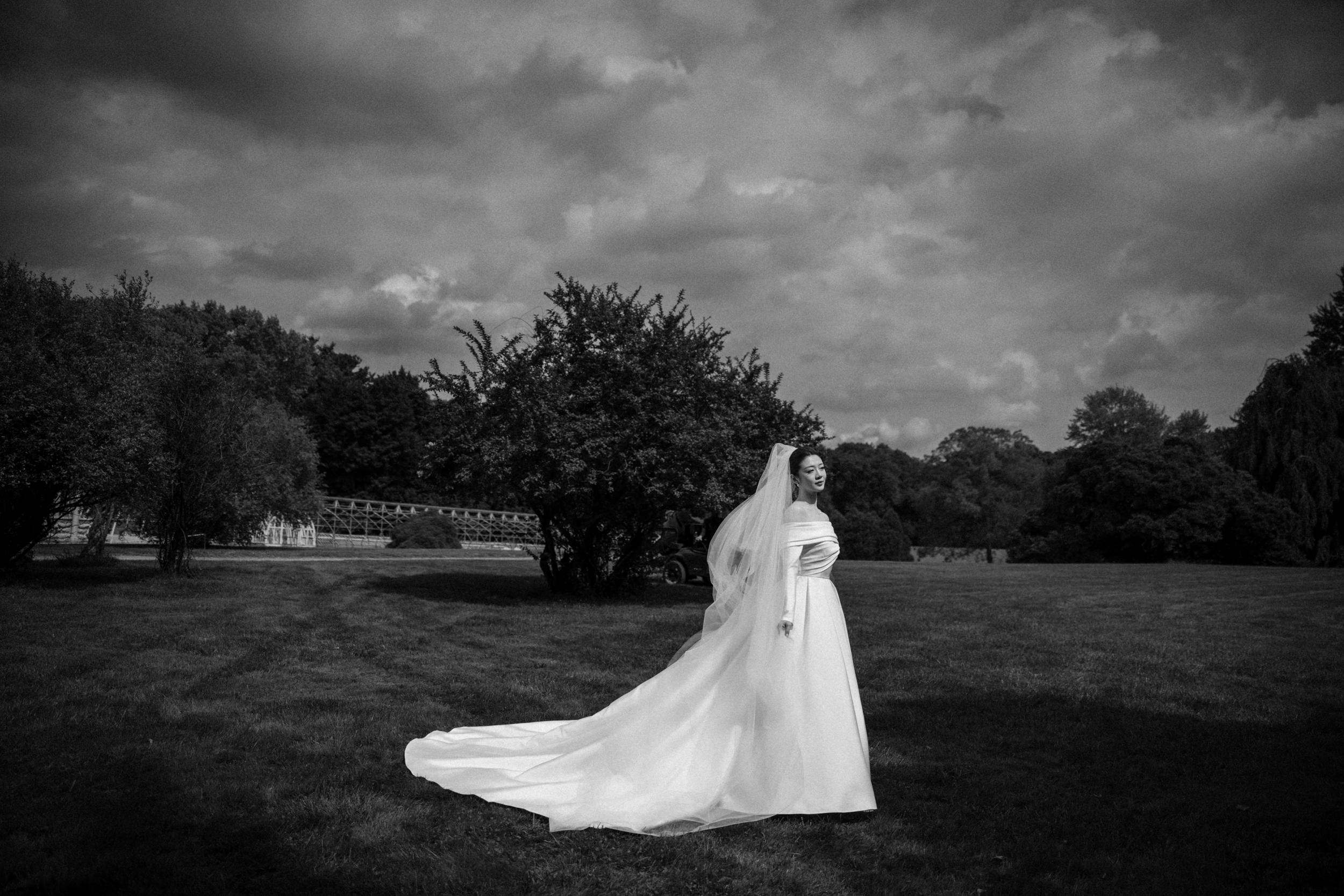
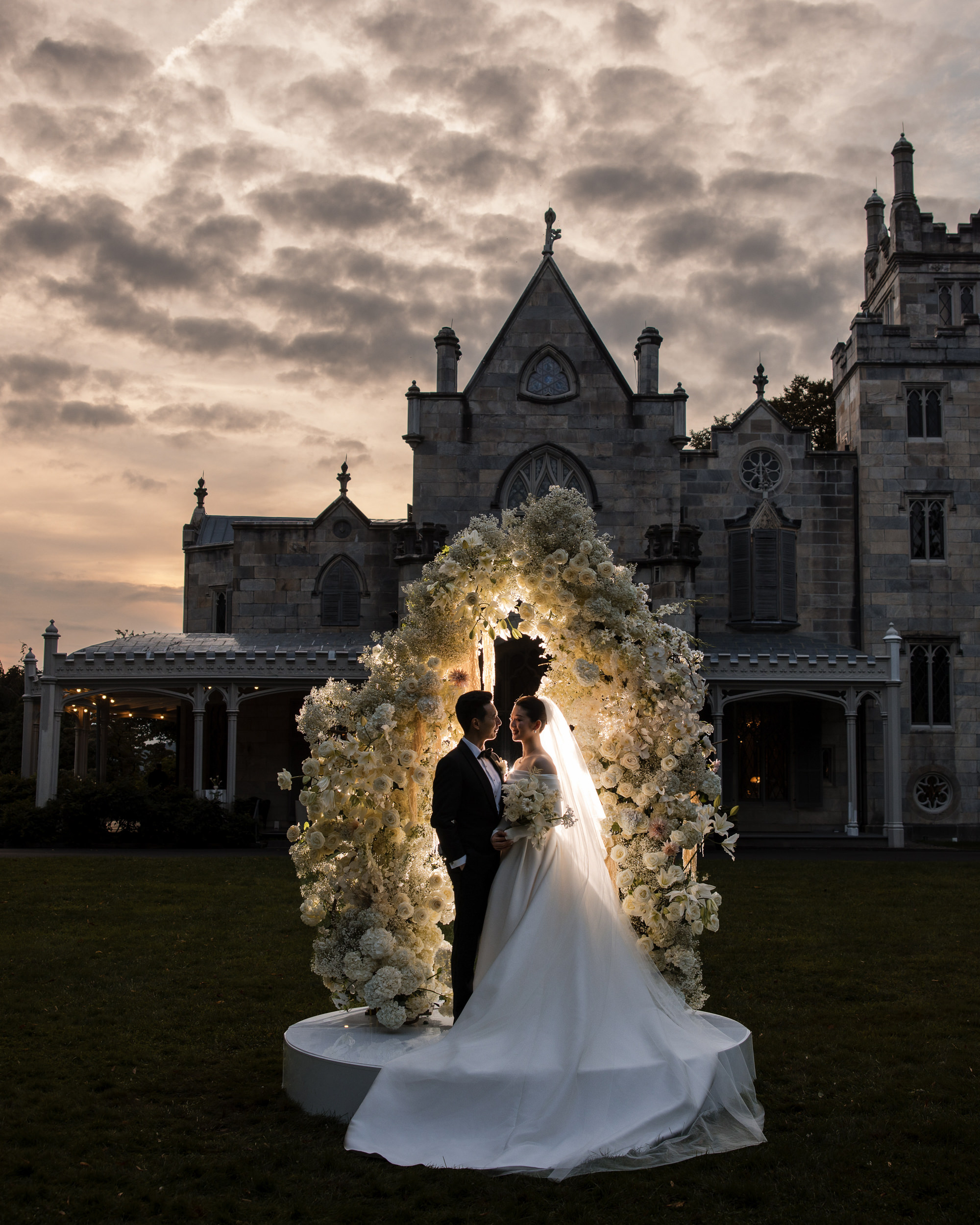
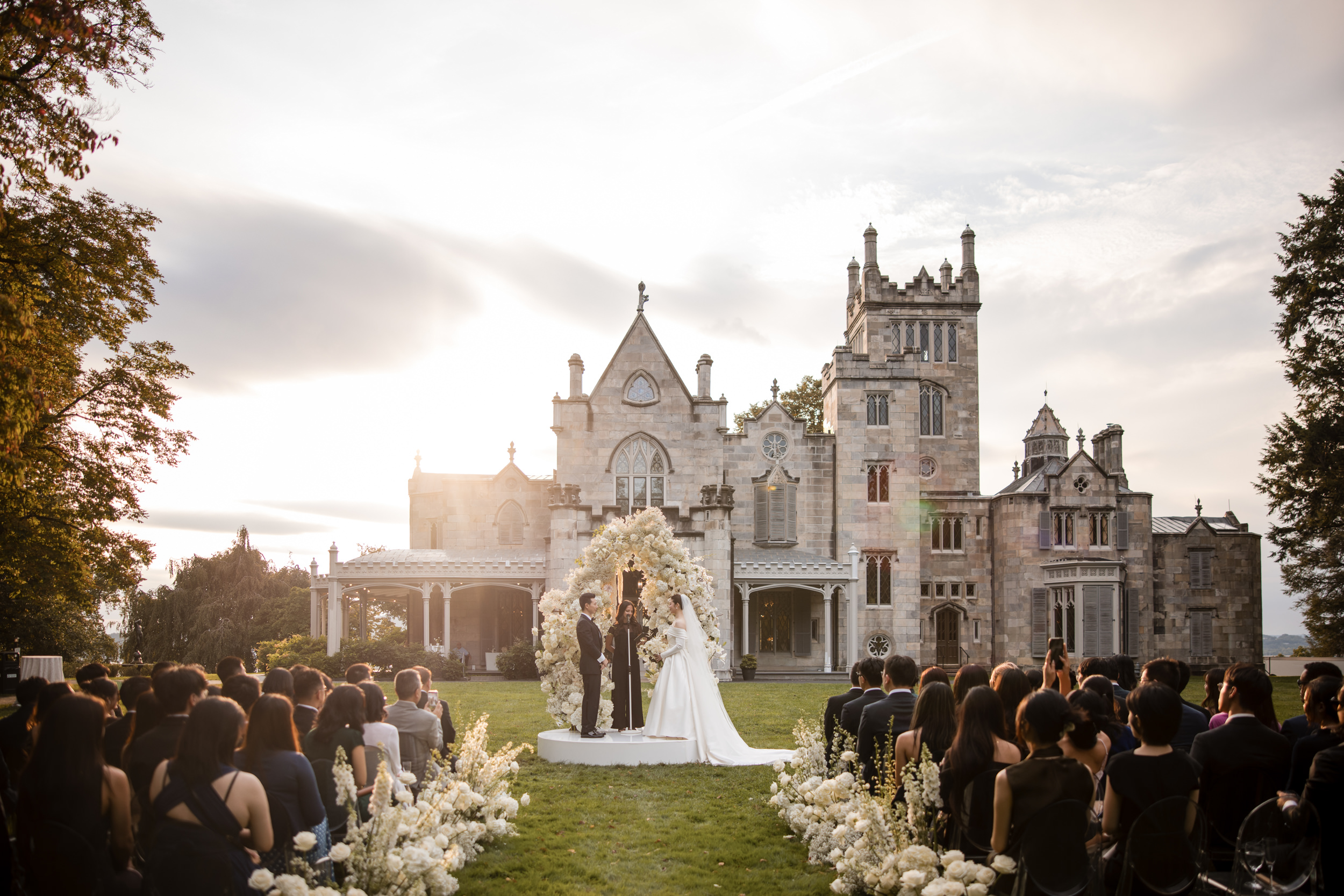
The sun sets behind the castle. So if your ceremony is on the lawn, you are facing west with the mansion between you and the sun, and from mid-afternoon onward everything is backlit and gold. I did not have to fix the light once, anywhere, all day.
After the ceremony, the rock garden behind the house is where the sunset is. It is not listed anywhere as an event space, and nobody will offer it to you. Go there at the end of the light.
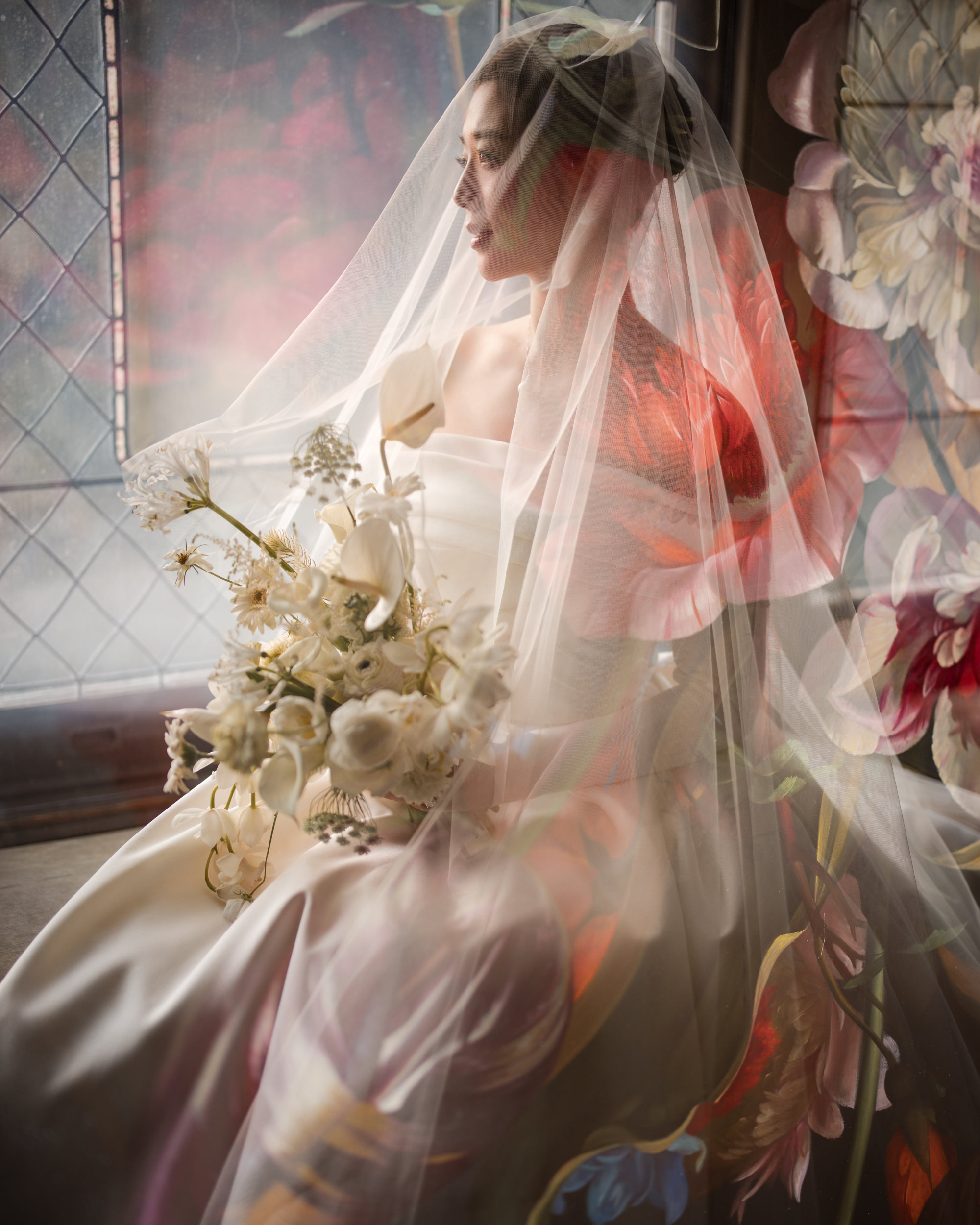
For interior portraits, ask Lyndhurst directly when you can go inside, and confirm before the day. Aim for about two hours before sunset.
Getting around
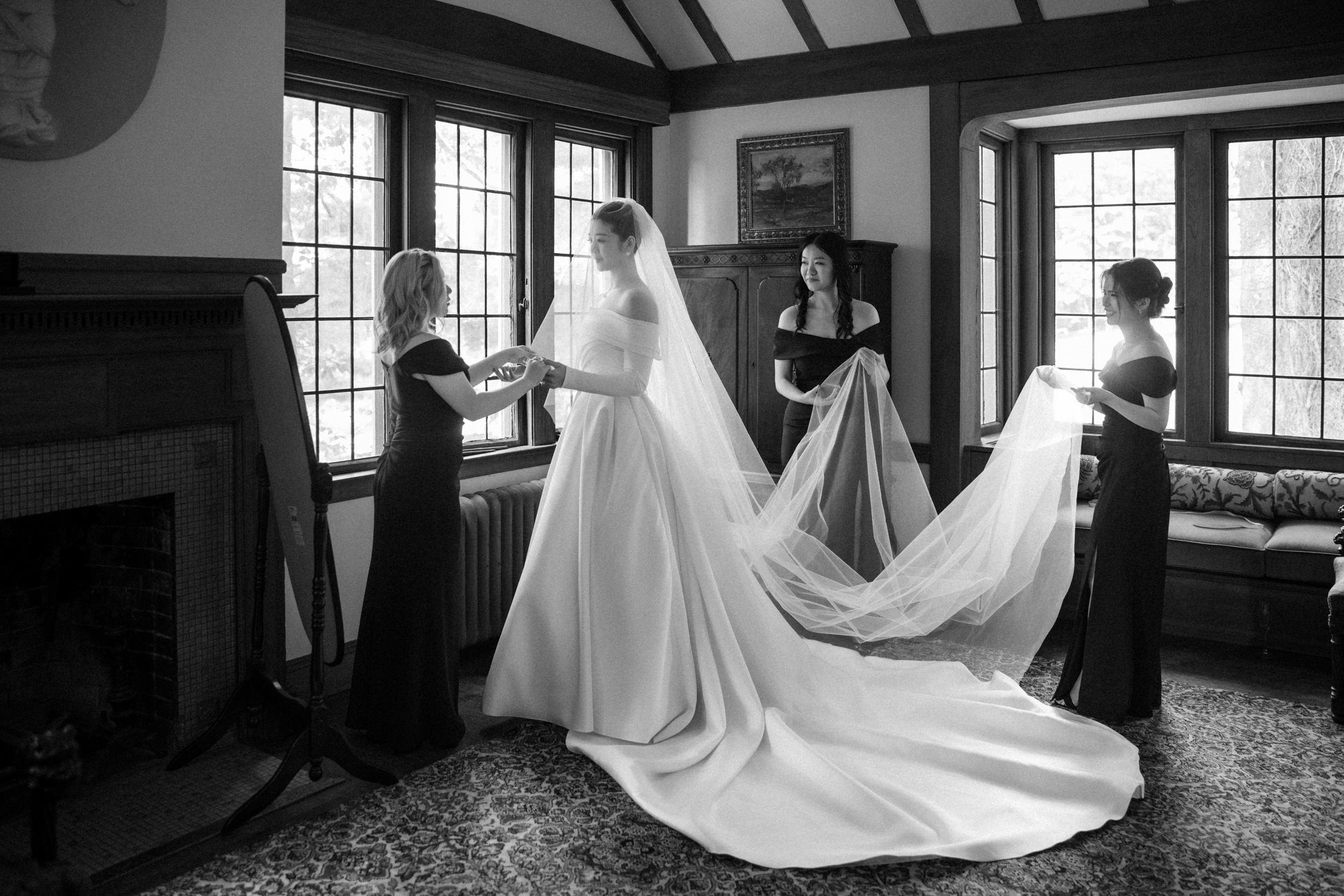
Sixty-seven acres is bigger than it sounds on a floor plan. The two getting-ready spaces, the suite in the Laundry Building and the Welcome Center, look close together on a map and are not. The Laundry Building to the ceremony lawn is about five minutes, which sounds like nothing until you do it in heels, uphill, in a dress.
Ask for a golf cart. Ask early, ask the coordinator, and do not be shy about it. There are dozens of places to make portraits here, and the only thing standing between you and most of them is the five or ten minutes it takes to walk there. On a wedding day, you do not have ten minutes forty times over.
Which brings me to what I tell every couple getting married here: give yourself real time for portraits, indoors and out, more than you think you need. Not because anything is difficult, but because the good spots are scattered across a large estate and getting to them eats the clock.
The spaces
Getting ready
Two separate buildings: the Laundry Building suite and the Welcome Center. Both are on the property, so nobody is driving in from a hotel in the morning.
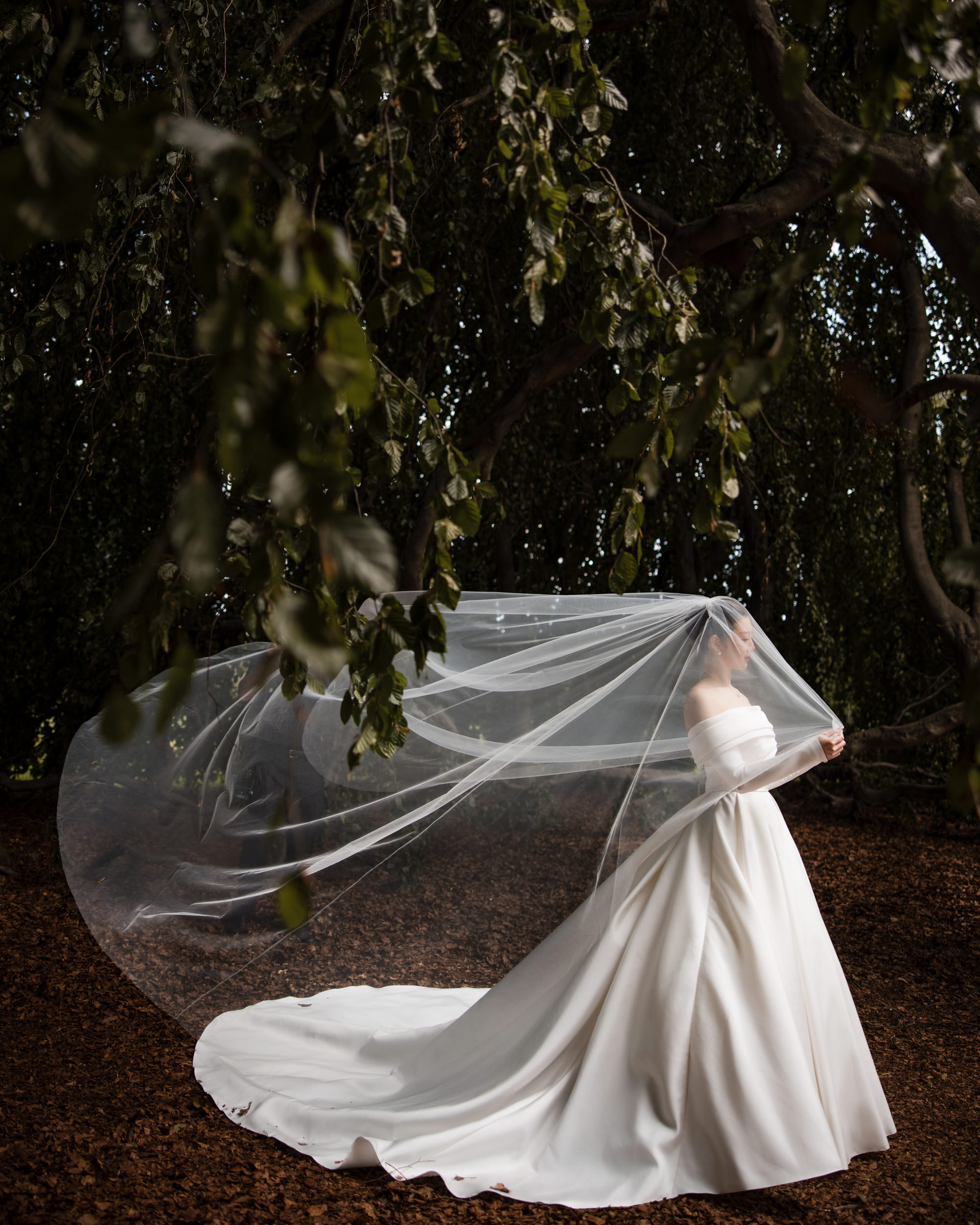
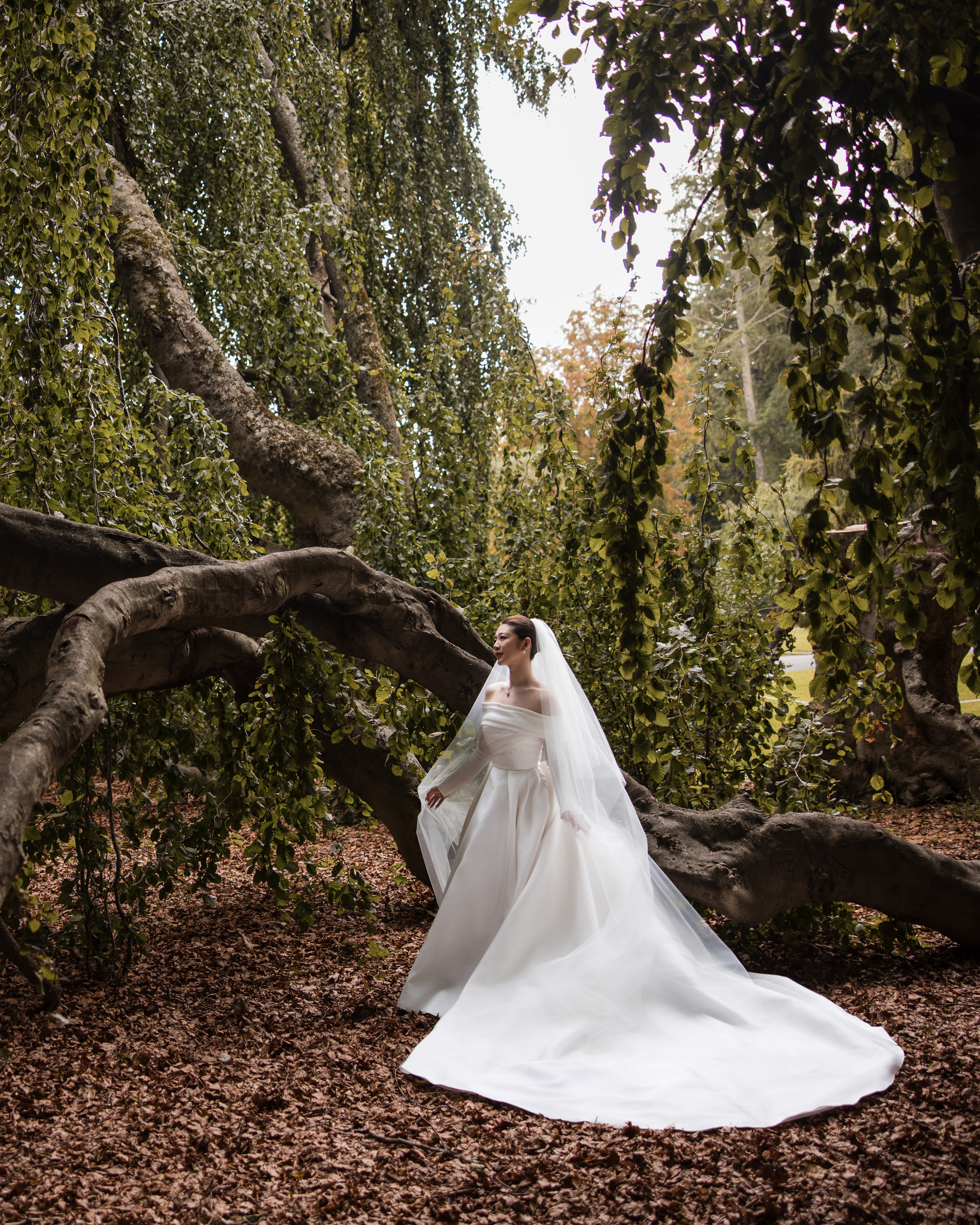
The weeping beech
A historic weeping beech stands on the grounds, with a canopy that comes almost to the ground. It makes a private green room in the middle of an open estate, and it is the best first look spot here by a distance. Family photographs work there too, right after, without moving anybody.
The Great Lawn
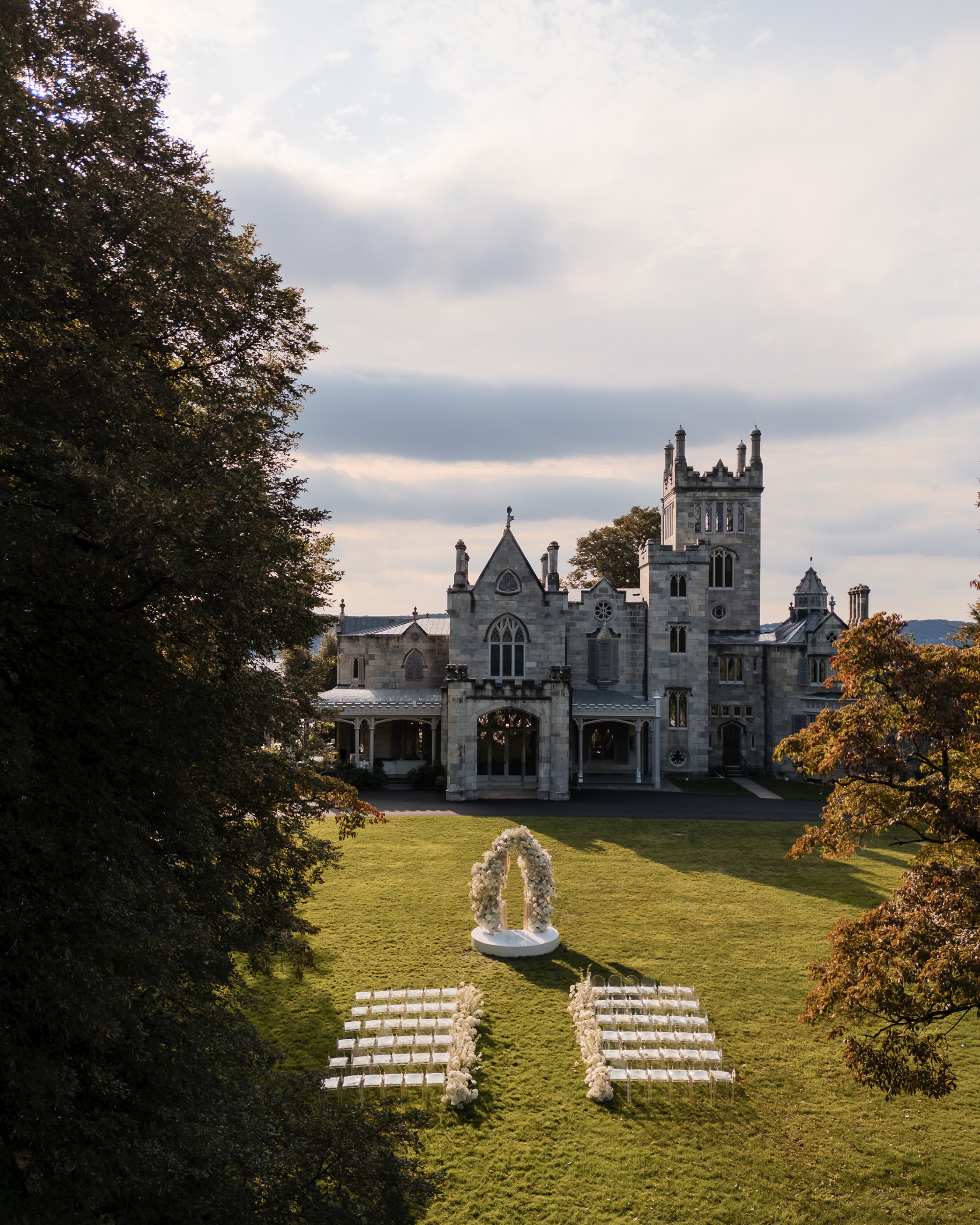
Main ceremony space, mansion behind you, river beyond. See the light section, because the direction this lawn faces is the most useful thing to know about a wedding here.
The Rose Garden
Smaller, enclosed ceremony option with a stone gazebo and the towers visible above the plantings. Helen Gould Shepard built it in 1911. Peak roses in June.
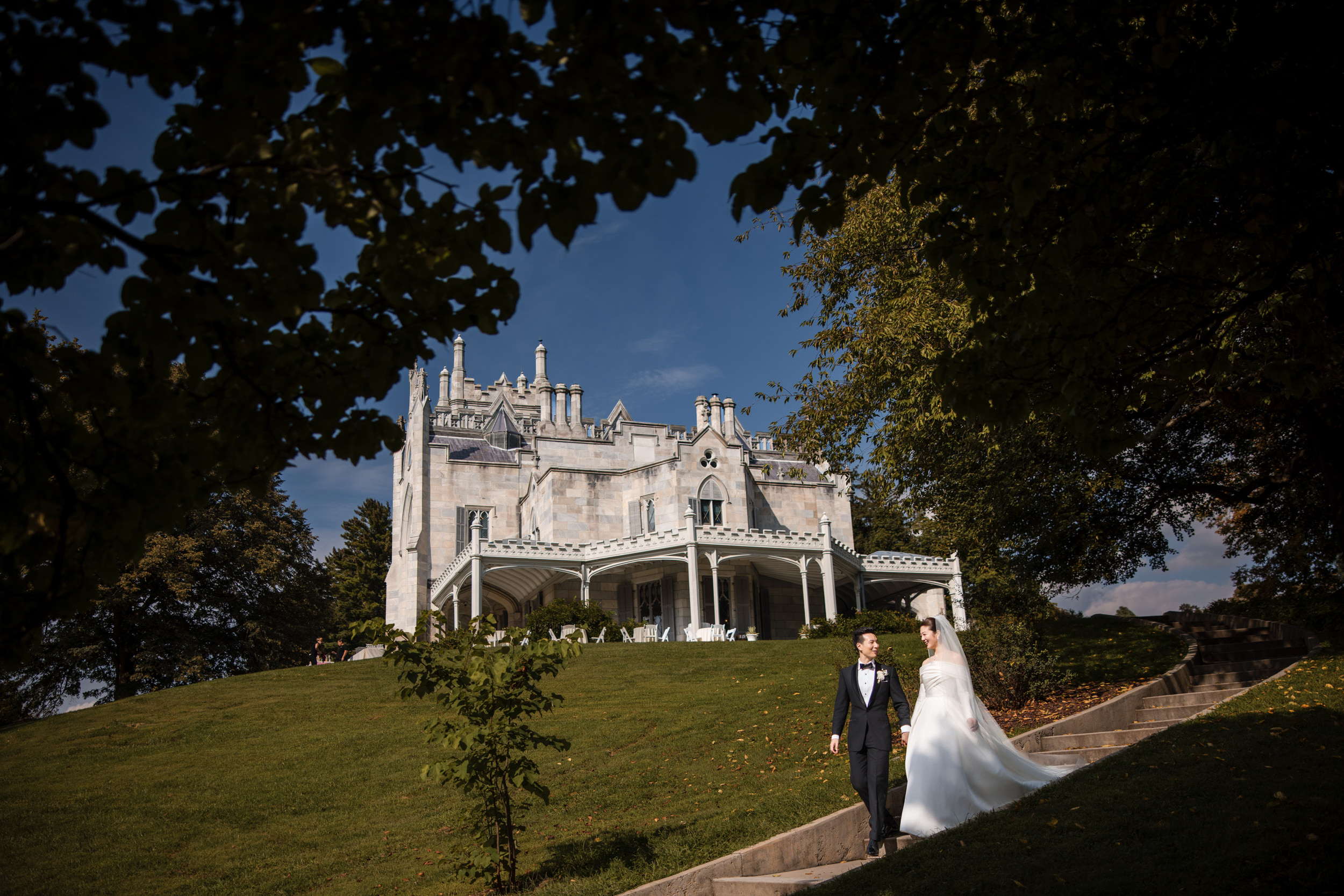
The Veranda
East side of the mansion, looking at the river and the bridge. Covered, and it holds a small seated dinner. It works as a rain backup for a smaller wedding. A larger one will need a tent, so don’t let anyone tell you the Veranda is your weather plan if you are inviting 200 people.
Lawn receptions
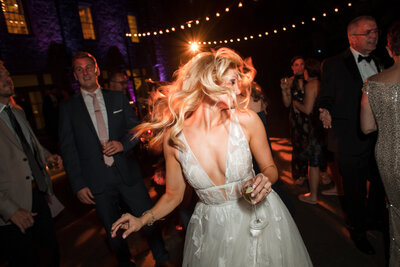
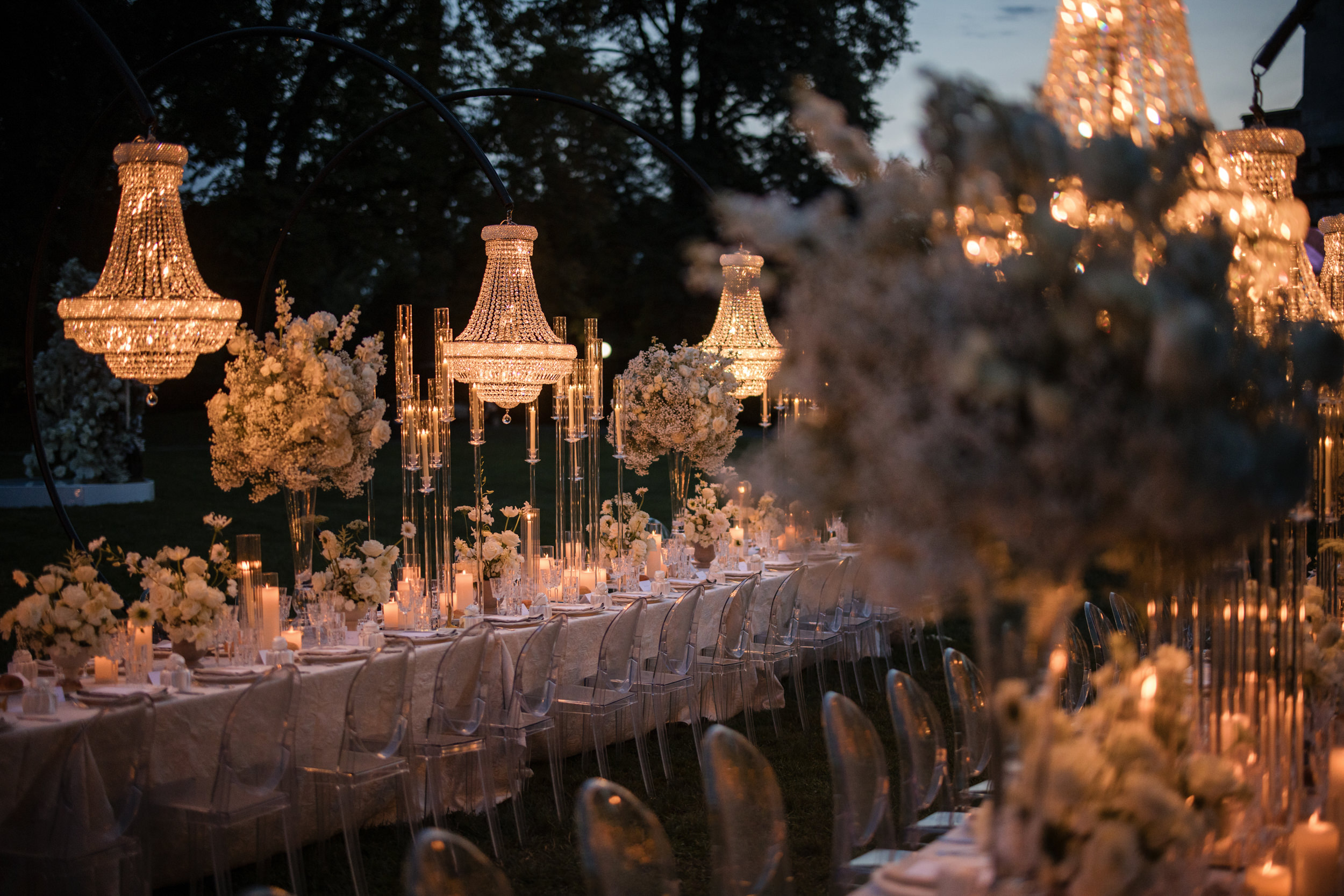
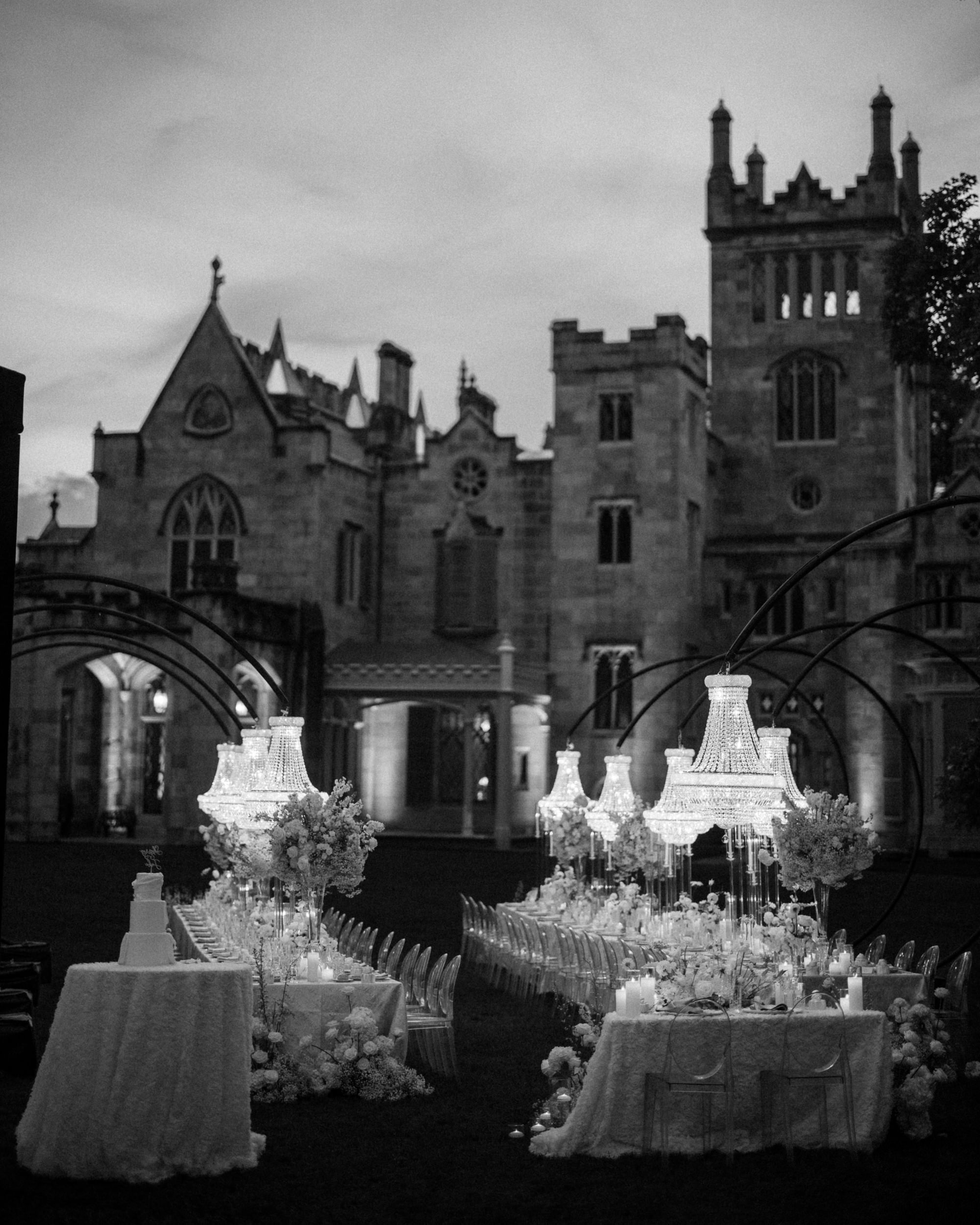
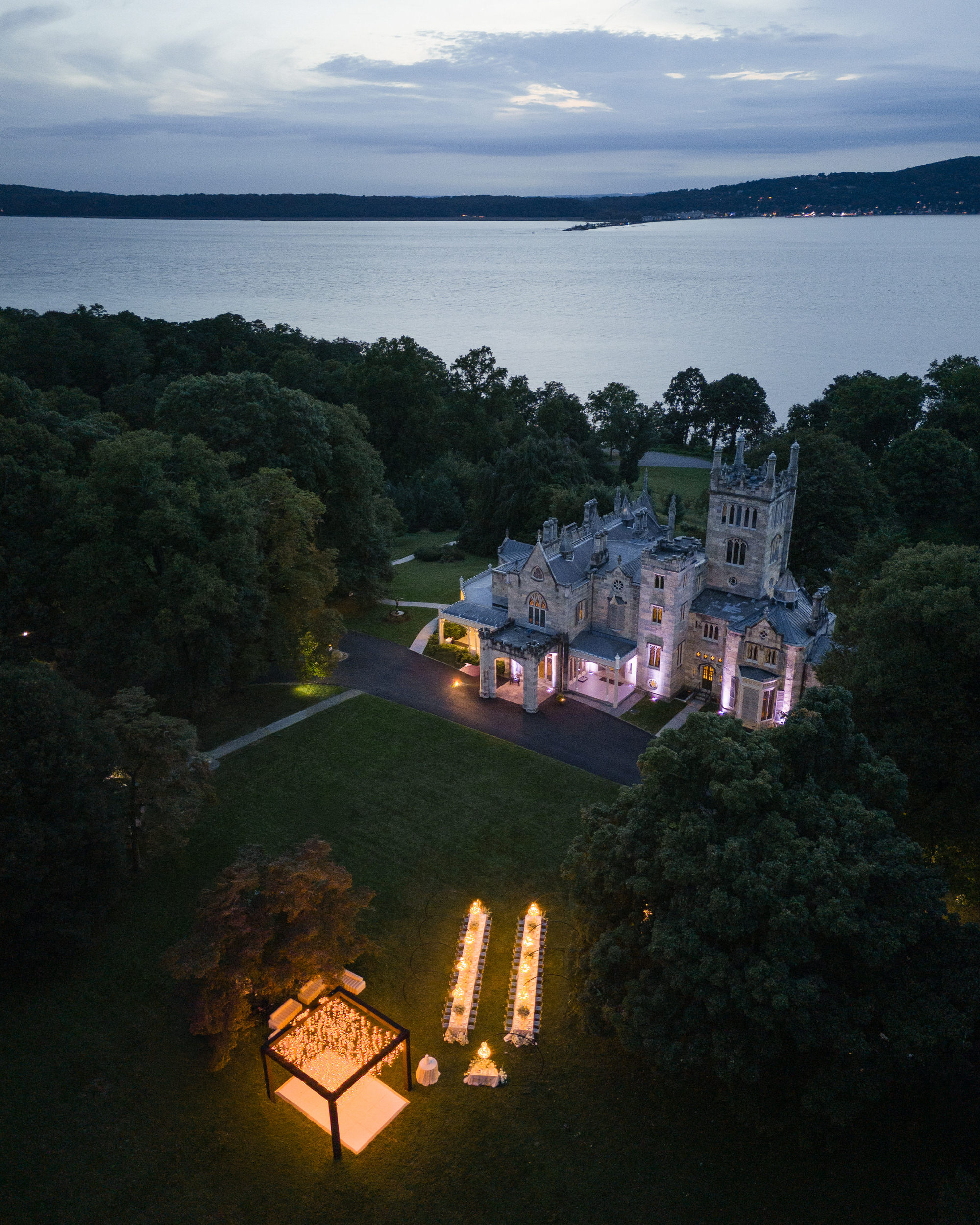
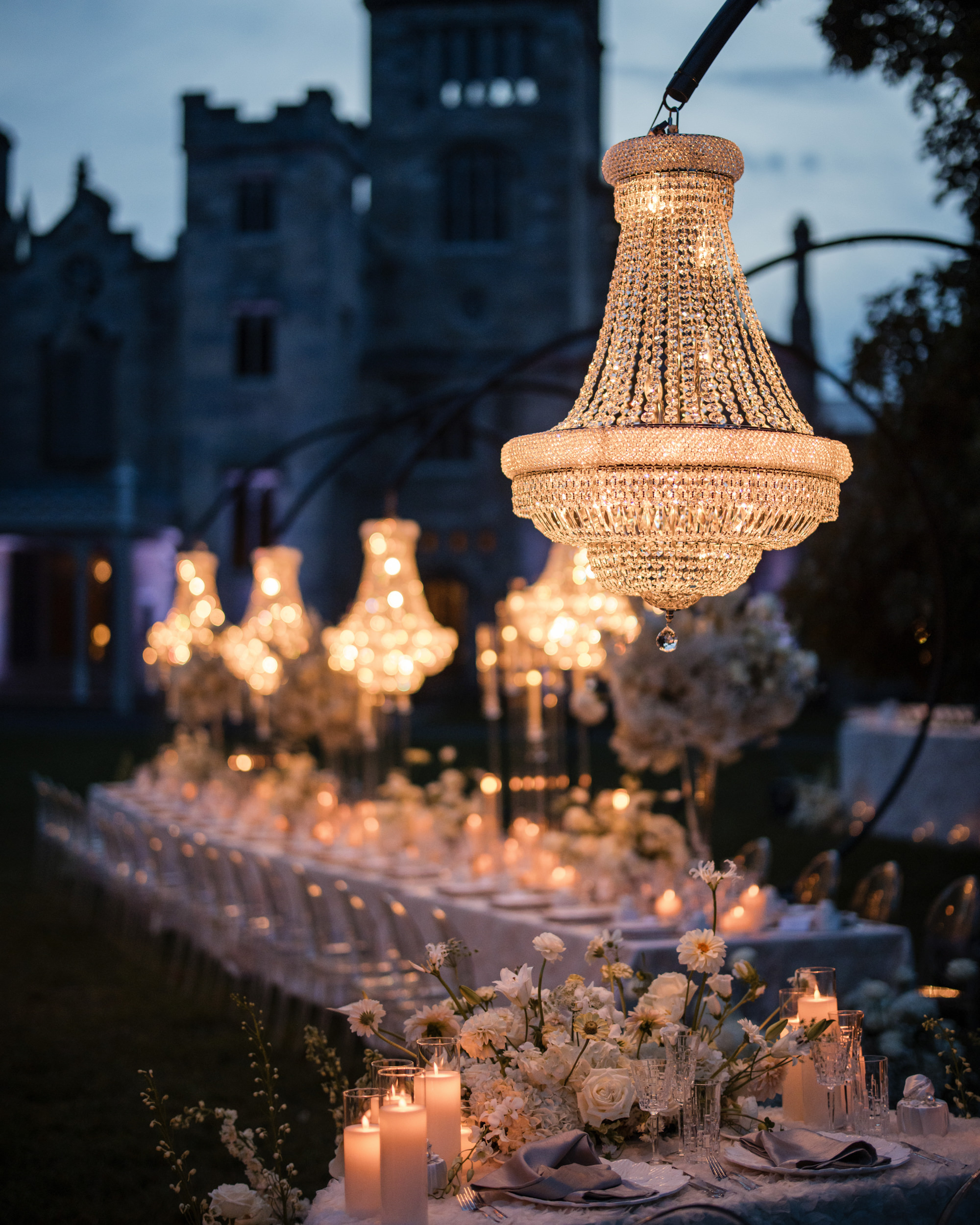
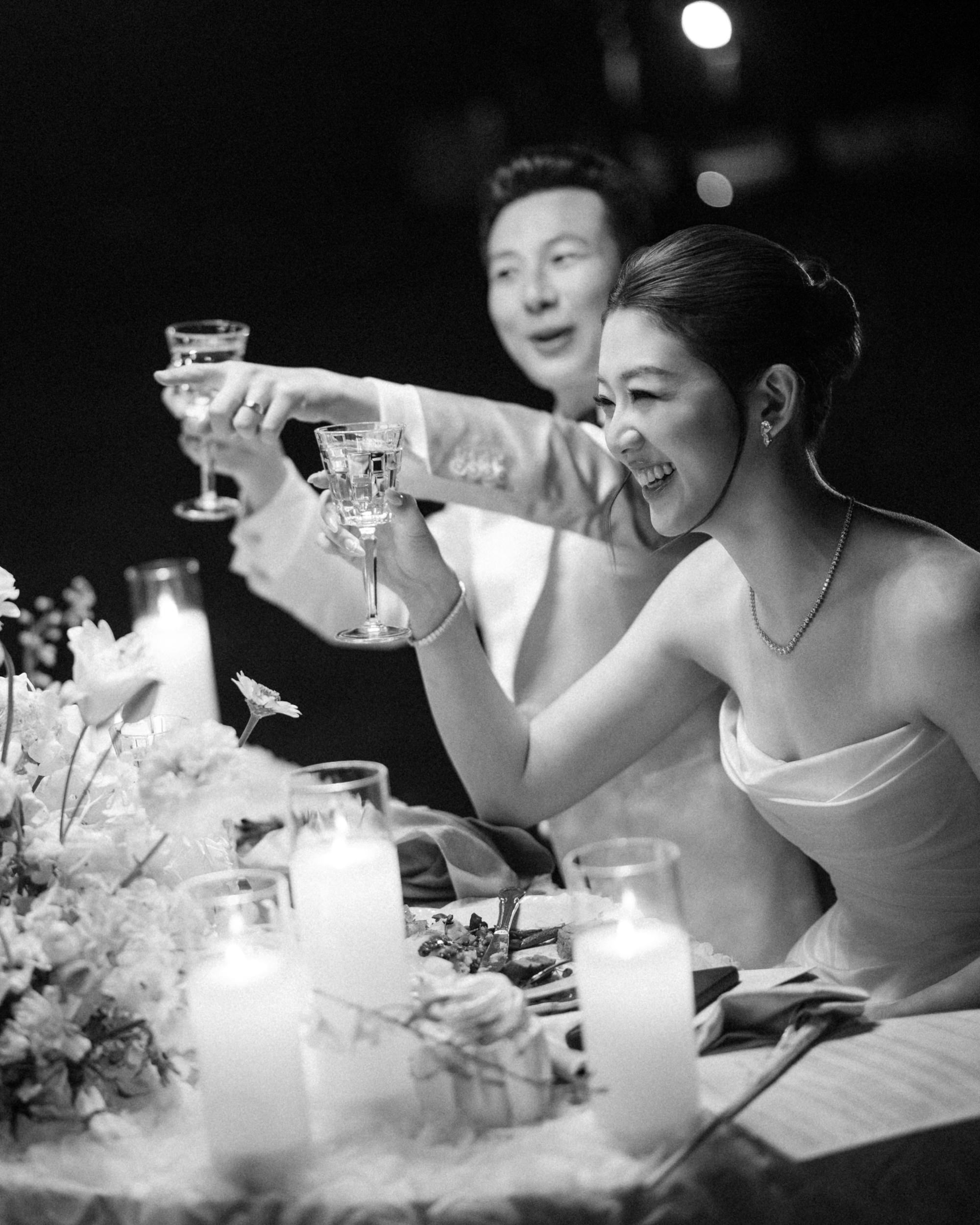
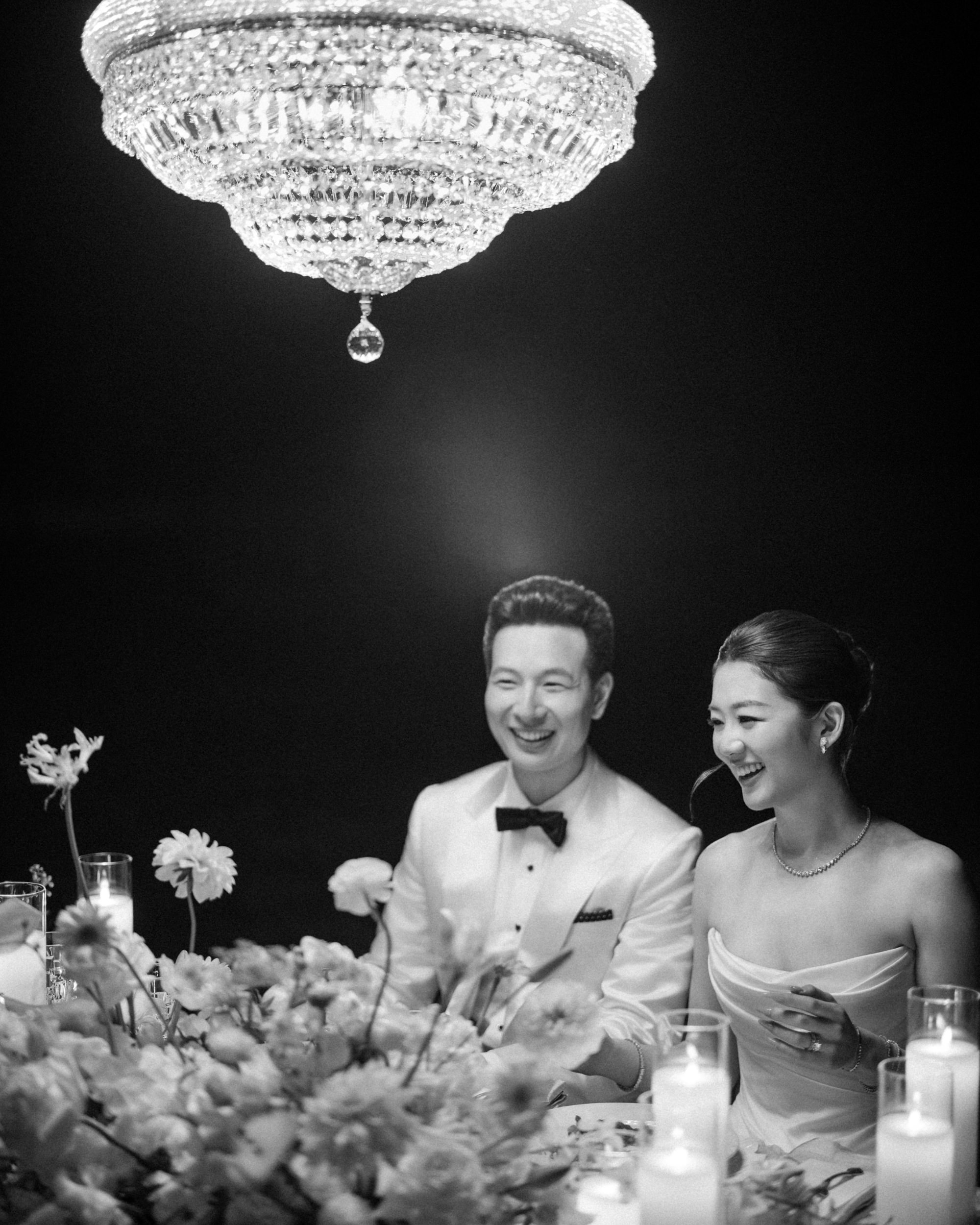
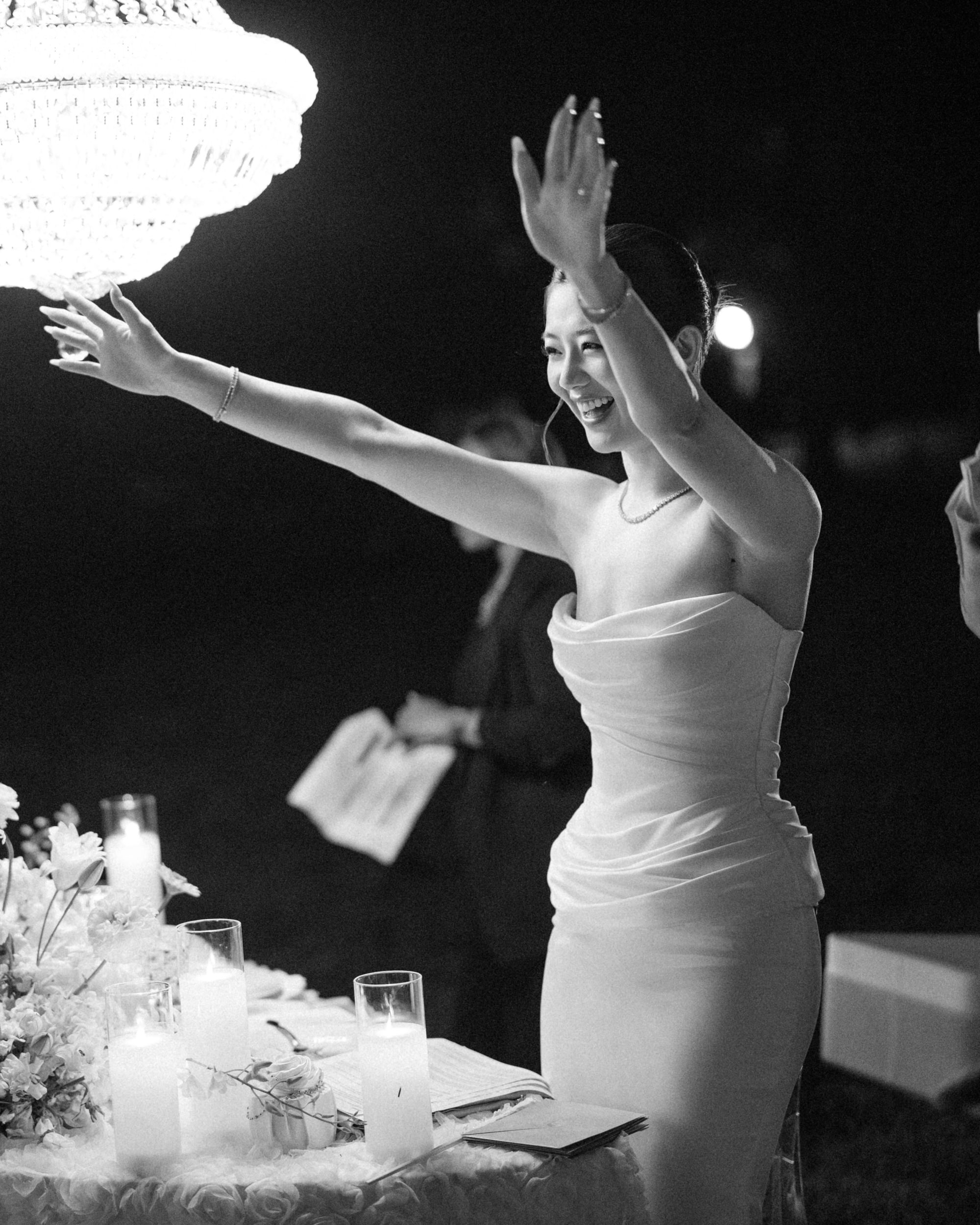
Both weddings I have photographed here put dinner on a lawn. The first time I came in almost at dark and only shot the reception, which was tented. The second was a full day, and the reception was open air: long tables, chandeliers and candelabras hung in the trees, a dance floor at the treeline, and nothing overhead. Same venue, two completely different-looking nights, and the difference was the tent.
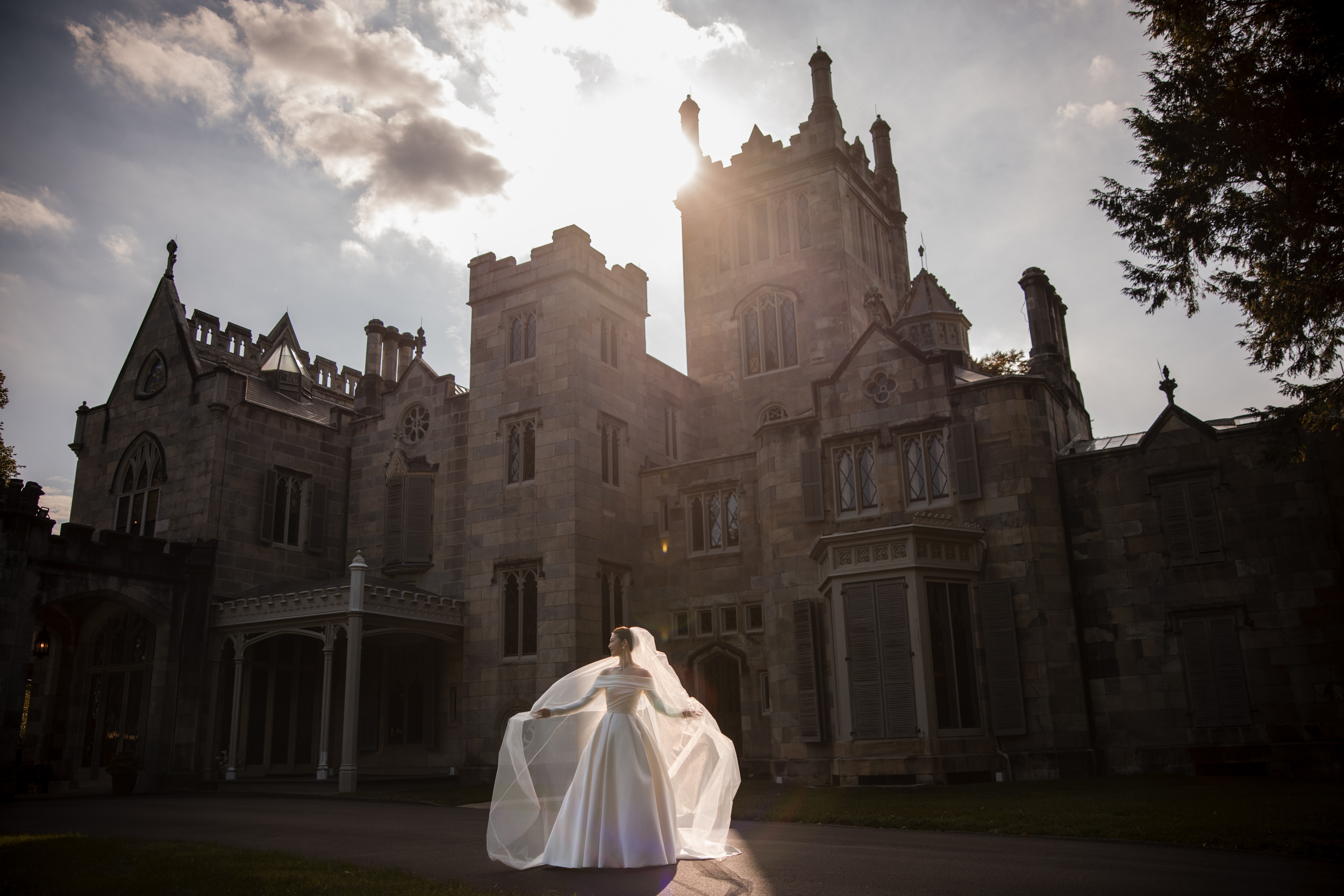
Inside the mansion
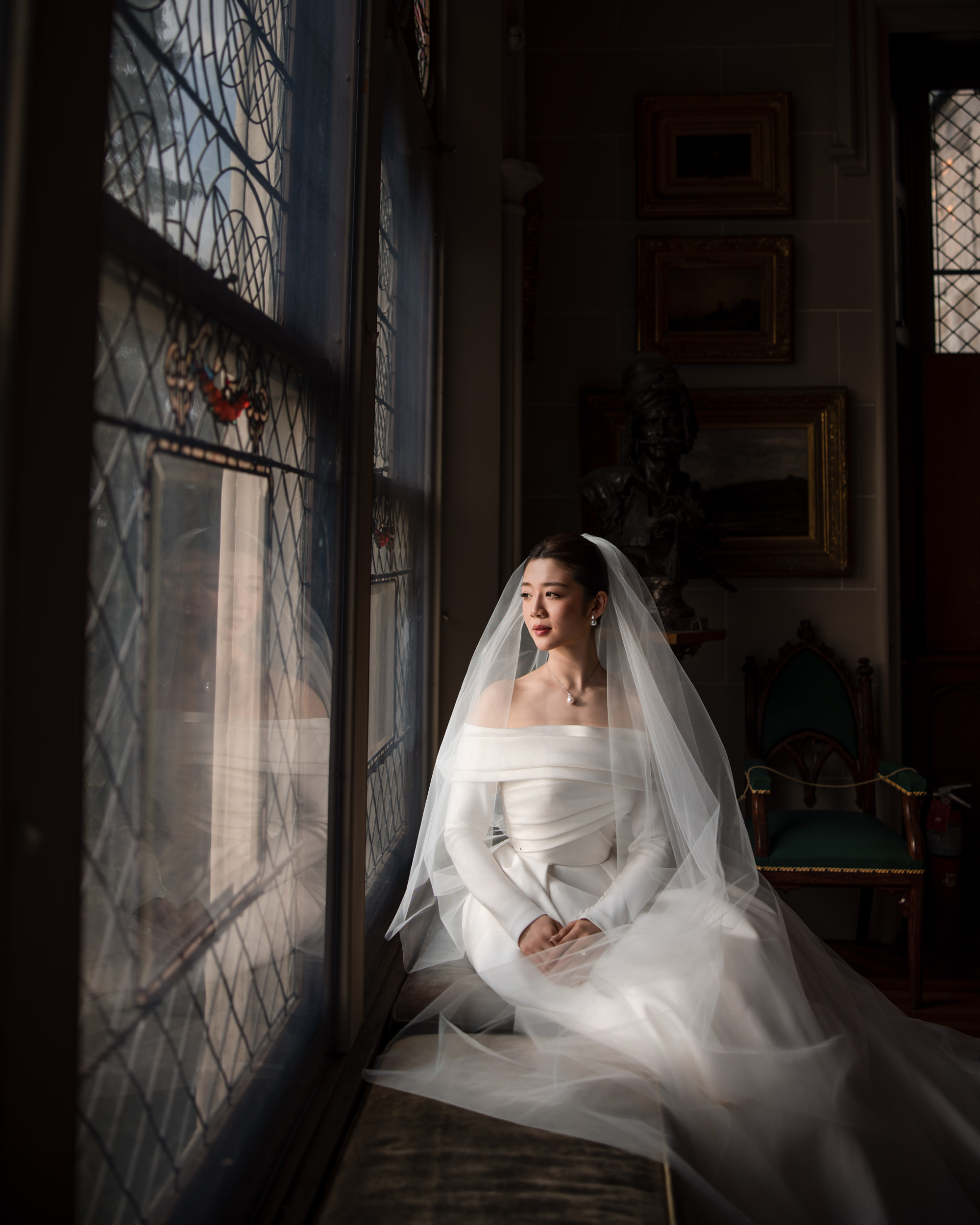
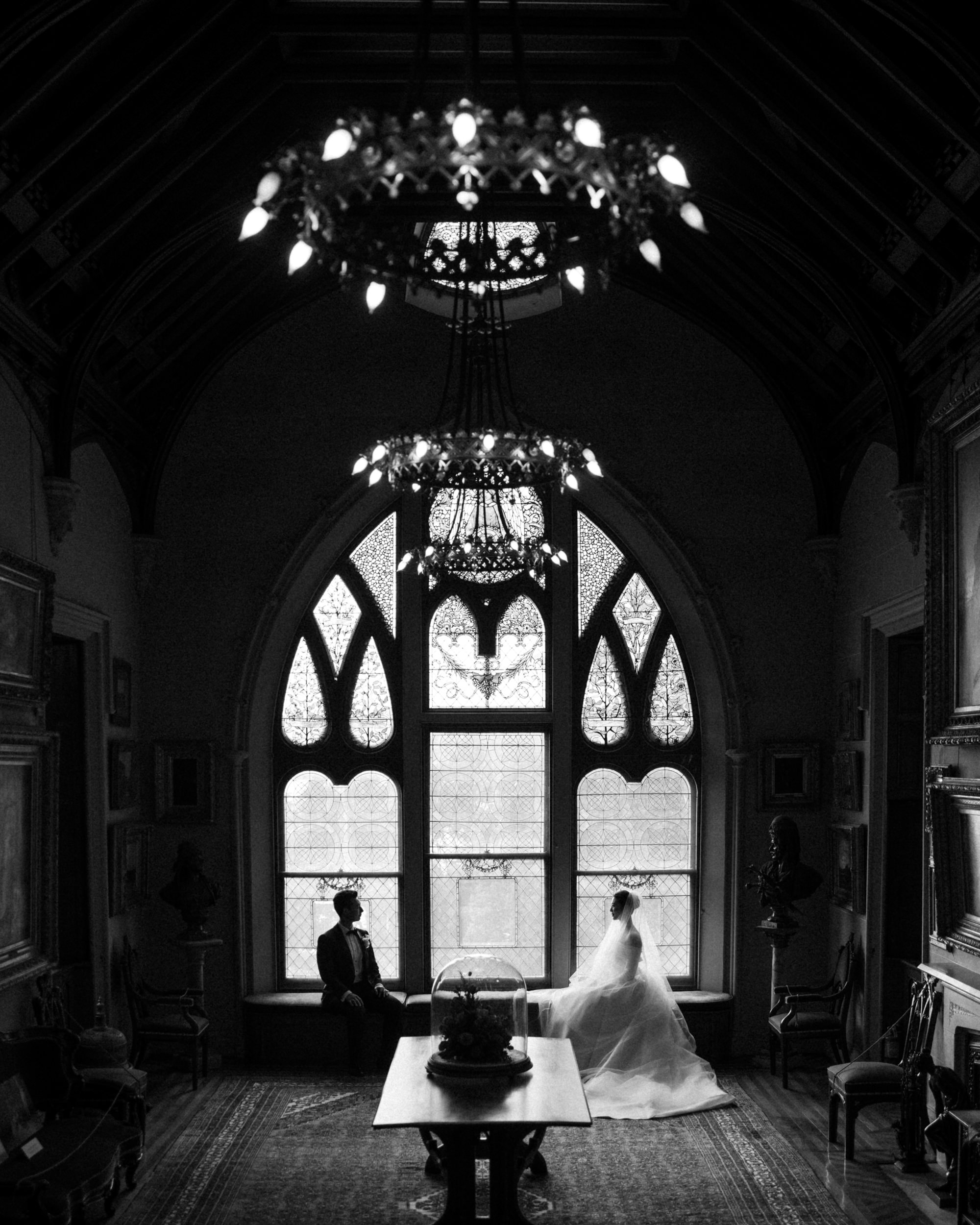
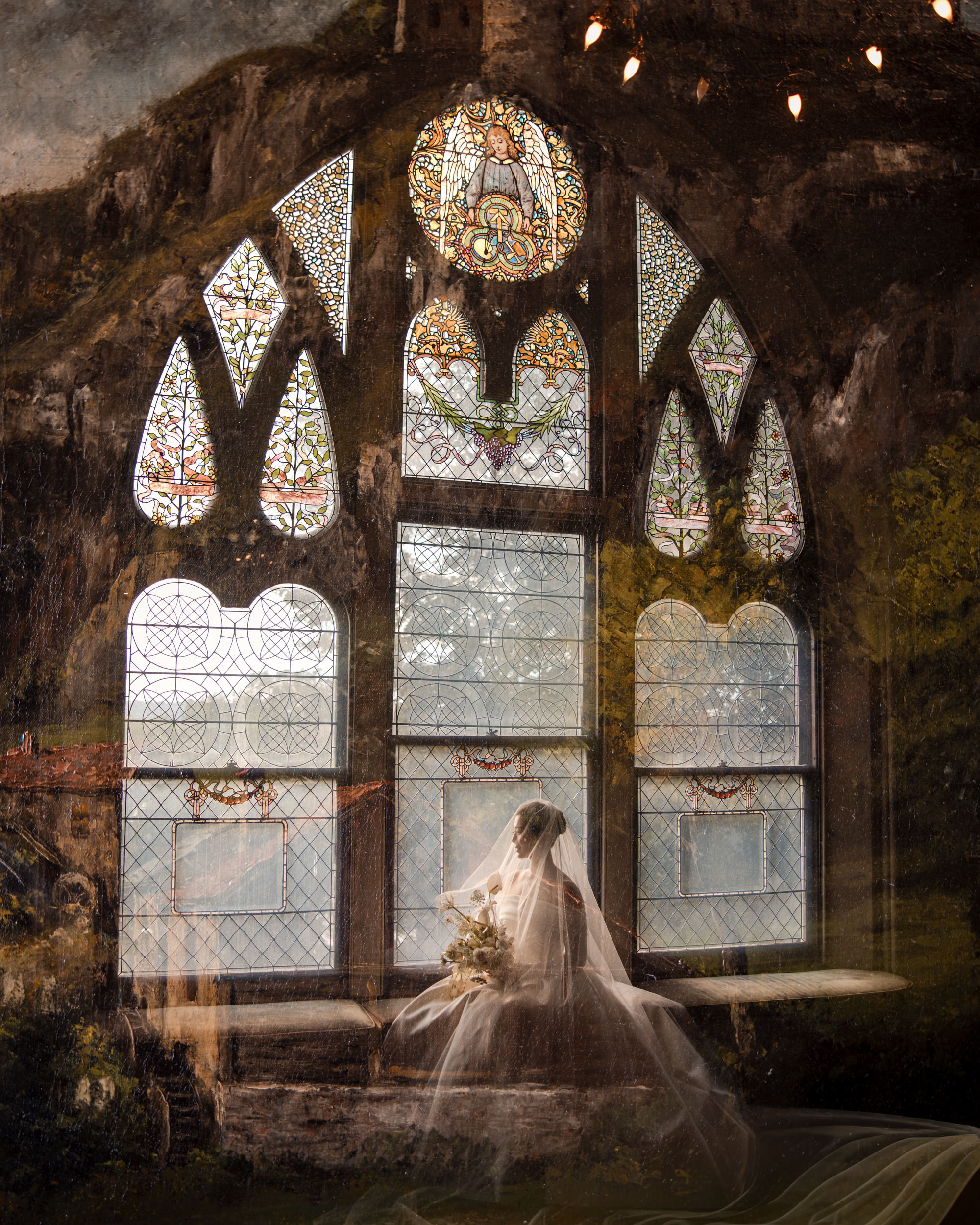
Couple only, not the full wedding party, and someone from Lyndhurst supervises you the entire time. Most of the rooms are roped off, so being allowed inside does not mean you can go everywhere. We had about twenty minutes.
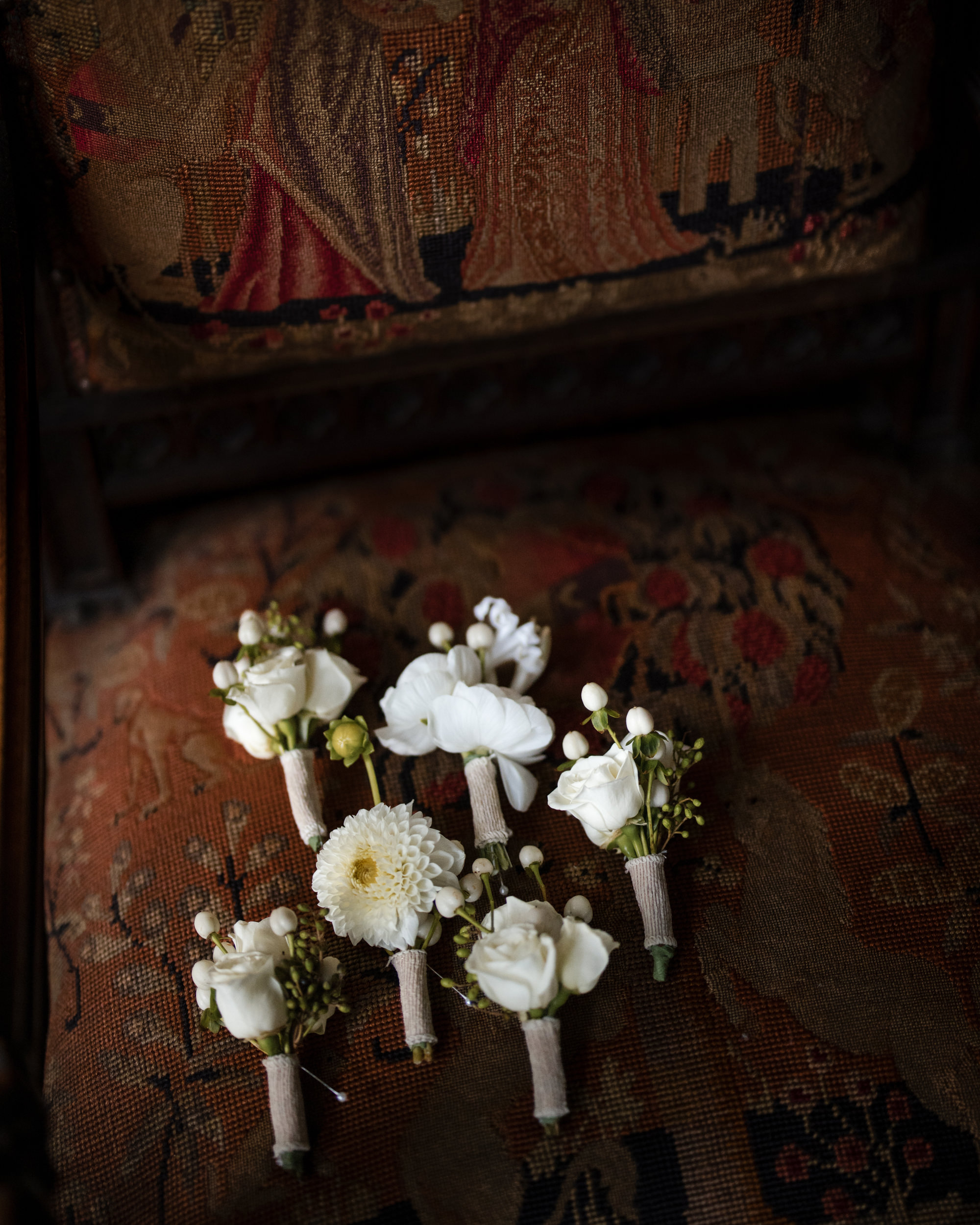
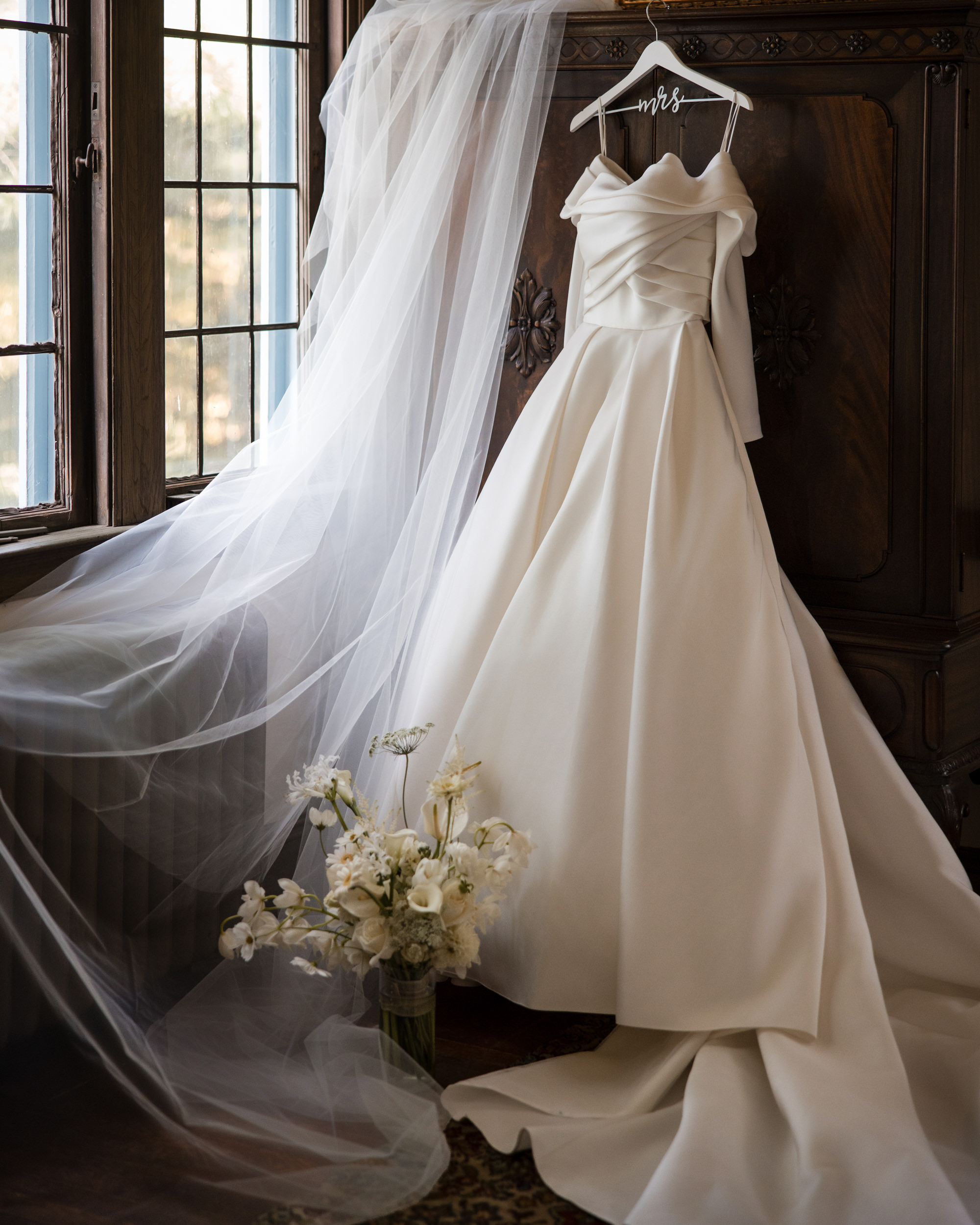
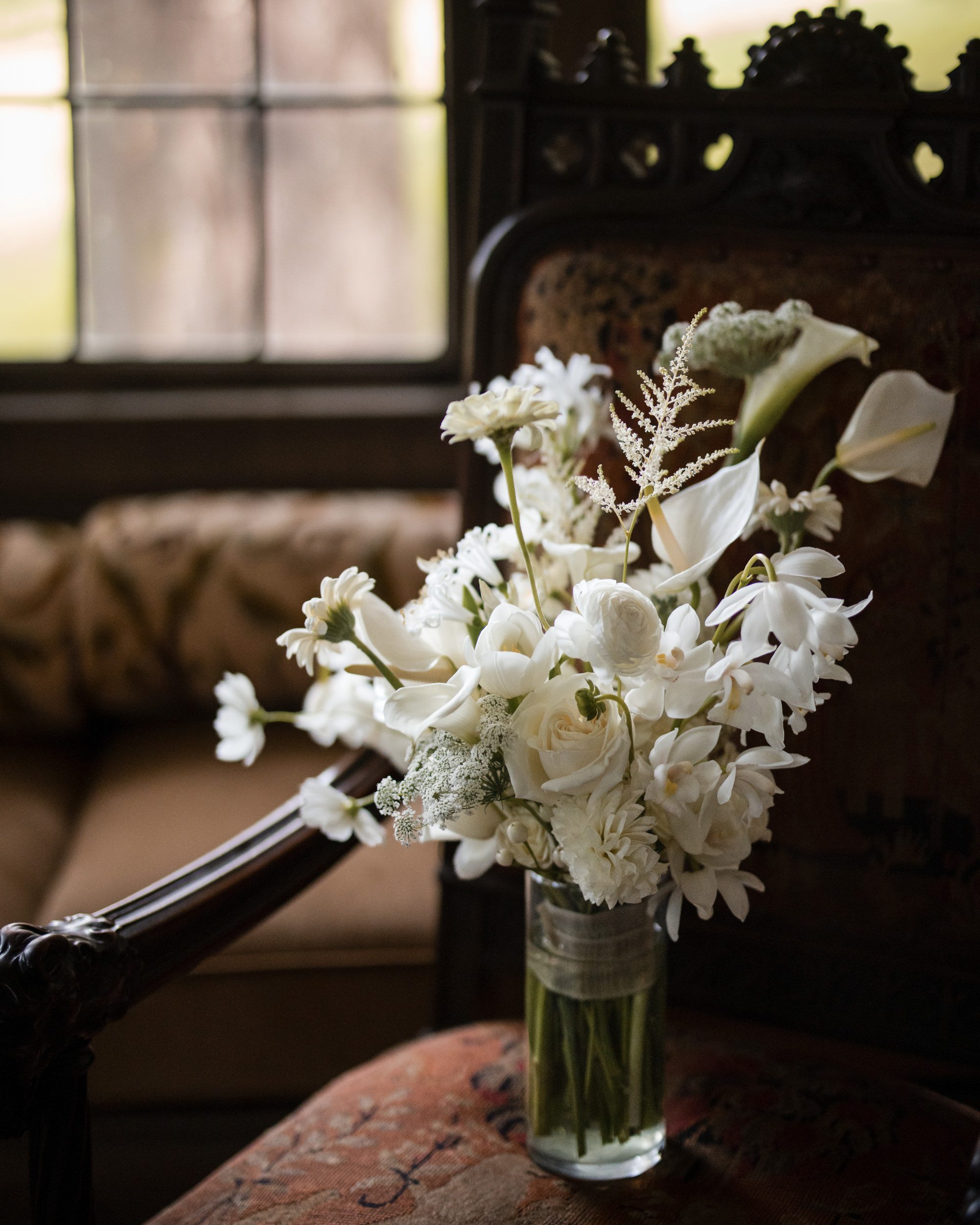
Twenty minutes with an escort and half the house closed sounds restrictive, and it is, but the Grand Picture Gallery, the Drawing Room, and the Library are enough. Those rooms are dark, and dark in the best way. The Gothic windows throw hard, directional light across everything, and you don’t need to add anything. Know the limit going in, decide beforehand what you want from those rooms, and confirm your window with Lyndhurst rather than assuming.
The fountain sitting area
Where guests gather before the ceremony, which is useful mostly because it means they are gathering somewhere other than where you are taking pictures.
The unglamorous part
Bathrooms are on the basement level of the castle. A staff member is on the property at night whose job is to watch the house and point guests toward it, which is worth knowing when you are thinking about where to put your reception relative to the mansion.
You can pull up to load in and then move to guest parking at the side of the mansion. At the end of the night, you can bring the car back up to load out, which at eleven at night after twelve hours on your feet is not a small thing.
Cell signal inside the buildings is bad. On the lawn it is fine. There is wifi in the buildings, so if you need to reach someone from inside the castle, that is how.
The estate
Built in 1838 by Alexander Jackson Davis for William Paulding Jr., a former mayor of New York. George Merritt expanded it in 1864 and added the tower, the bowling alley, and the observatory. Jay Gould bought it in 1880. His daughter Anna gave it to the National Trust for Historic Preservation in 1961. The interiors show up in HBO’s The Gilded Age.
It is a working museum, so there are visitors on the grounds during the day. They didn’t affect my day at all. Everyone was lovely, and I barely noticed them.
Frequently asked questions about Lyndhurst Mansion weddings
Where is Lyndhurst Mansion?
635 South Broadway, Tarrytown, New York, in Westchester County on the east bank of the Hudson. About twenty-five miles north of Manhattan. More at lyndhurst.org.
How do guests get there from the city?
Metro-North from Grand Central to Tarrytown is roughly forty minutes, and the estate is a short drive from the station. Hotels in Tarrytown, Elmsford, and White Plains.
-
- default
Where can the ceremony be?
The Great Lawn with the mansion behind you. The Rose Garden for something smaller. Inside the mansion for an intimate ceremony. Exclusive use of the property is available.
What is the light like?
The sun sets behind the castle, so a late afternoon ceremony on the lawn is backlit and golden. The Gothic windows throw shaped light through the interior rooms. The rock garden behind the house is where the sunset ends up.
When can you shoot inside the mansion?
Access is for the couple, not the wedding party, and you’ll need to confirm the timing directly with Lyndhurst. Around two hours before sunset works well. A staff member supervises, most rooms are roped off, and we had roughly twenty minutes.
Where are the bathrooms?
Basement level of the castle. There is someone on staff at night to direct guests there.
Is there cell service?
Not really inside the buildings. Fine on the lawn. There is wifi indoors.
What is load-in like?
Pull up to unload, then park in guest parking at the side of the mansion. You can bring the car back up at the end of the night to load out.
How much time should we allow for photographs?
More than you would at a venue with a smaller footprint. There are a lot of good locations here and they are spread across sixty-seven acres, so walking between them takes real time. Ask about a golf cart.
Where do receptions happen?
Both of mine here were on a lawn, one tented and one open air. Tenting changes the look of the night considerably, so it is worth deciding early rather than treating it as a weather question.
Who caters?
Through the CulinArt Catering Collection, which at Lyndhurst means Philip Stone Caterers, Robbins Wolfe Eventeurs, or Regal Glatt Kosher Caterers.
Are there museum visitors during weddings?
Yes, during the day. It was a non-issue for me.
What time of year?
Late spring through early fall for the grounds. Roses peak in June. October foliage against Gothic stone across sixty-seven acres is hard to beat. The interiors make winter work if you want the architecture without the outdoors.
Do you photograph weddings at Lyndhurst?
Yes. If yours is here, I would love to hear about it.